
ZenGRC vs Archer: Which GRC Platform Fits Your Compliance Program?
Summary
Archer is priced per module and scaled to organization size, with implementations that commonly run 6 to 12 months. ZenGRC runs on a data model that’s already built for compliance, with most teams live in weeks instead of months. The choice comes down to whether a compliance program gets built from scratch on Archer’s configurable platform, or runs from day one on a data model that already understands controls, risks, and evidence.
ZenGRC vs Archer: Quick Comparison Table
| # | Feature | ZenGRC | Archer |
|---|---|---|---|
| 1 | Platform approach | Purpose-built GRC data model | Configurable workflow engine across 13+ modules |
| 2 | Pricing model | Flat rate, unlimited users, frameworks, and vendors | Per-module licensing, scaled by organization size |
| 3 | Typical customer | Compliance teams running multi-framework programs | Large enterprises in banking, insurance, and government |
| 4 | Implementation | Most teams live in weeks | Commonly 6 to 12 months or longer |
| 5 | HITRUST integration | Native MyCSF API, e1, i1, and r2 supported | Not named on Archer’s own product pages |
| 6 | Support model | Named CSM and phone support, included for every customer | Customer Success Program, with Archer Academy certification for administrators |
| 7 | AI | AI automations for scoping, control design, and gap analysis | Archer Evolv focuses on regulatory change monitoring |
Who Archer and ZenGRC Are Actually Built For
Archer has been part of enterprise risk and compliance for more than two decades, originally built as RSA Archer before changing hands twice, most recently to Cinven in 2023. Today it spans more than a dozen separate modules, from regulatory change management to third-party governance to operational resilience, and counts 38 of the top 50 banks among its customers. For a large, heavily regulated enterprise with its own GRC engineering function, that depth is exactly the point.
Most compliance teams aren’t built like that. A team running SOC 2, HIPAA, and HITRUST together usually has a handful of people, not a dedicated platform administrator, and needs a program running in weeks, not a multi-year configuration project. We built ZenGRC for that team specifically: a compliance data model that’s already mapped, framework content preloaded, and a flat rate that doesn’t change as the program grows.
ZenGRC vs Archer: A Detailed Comparison
This comparison is based on what each platform is actually built around, how the pricing models behave as your program grows, what implementation really costs in time and consulting hours, how HITRUST is handled, where each platform has pointed its AI, and what support looks like after you’re live. Let’s take a look at how the two platforms really compare:
Platform Architecture
The core difference between these two platforms starts with what you’re actually buying.
| # | Area | ZenGRC | Archer |
|---|---|---|---|
| 1 | What you buy | One platform built around the compliance data model | A configurable workflow engine spanning 13+ separate modules |
| 2 | Out-of-the-box state | Controls, risks, evidence, and audits already connected | An empty structure that has to be configured to match your program |
| 3 | Who configures it | No dedicated builder role required | Typically a dedicated administrator or outside consultant |
Bottom line: Our data model already understands compliance concepts before you log in. Archer is a workflow engine that can be configured into a GRC program, but that configuration is the product, and it doesn’t come built.
Pricing
Neither company publishes a price list, so the difference shows up in the model, not a number.
| # | Area | ZenGRC | Archer |
|---|---|---|---|
| 1 | Pricing structure | One flat rate | Per-module licensing scaled by organization size |
| 2 | Adding a module or team | No added cost | Each additional module or use case is priced separately |
| 3 | Typical entry point | Built for mid-market compliance teams | No mid-market entry tier, enterprise-only economics |
Bottom line: Archer’s licensing model means the cost grows every time your program adds a module, a use case, or more users. Our flat rate stays the same regardless of how many frameworks, users, or vendors you add.
Implementation Timeline and Cost
How long it takes to go live, and who does the work to get there, is where these two platforms diverge most.
| # | Area | ZenGRC | Archer |
|---|---|---|---|
| 1 | Typical timeline | Live in weeks | Commonly 6 to 12 months or longer |
| 2 | Who does the configuration | Expert-guided implementation included | Dedicated administrator or outside consulting firm, often for multiple years |
| 3 | Learning investment | No formal certification required | Archer Academy certification program |
Bottom line: Archer’s own reviewers describe hiring a full-time platform administrator and contracting consulting firms for years to build out the system. Our implementation is guided by your own named CSM and typically wraps in weeks, not years.
HITRUST and MyCSF
If HITRUST sits alongside other frameworks in your program, this is usually where the gap shows up.
| # | Area | ZenGRC | Archer |
|---|---|---|---|
| 1 | MyCSF integration | Native API, evidence and control responses sync both ways | Not named on Archer’s own product pages |
| 2 | Certification levels | e1, i1, and r2 supported natively | Not stated |
| 3 | Where it’s documented | ZenGRC’s own HITRUST product page | HITRUST’s MyCSF page lists Archer as compatible through custom API work |
Bottom line: ZenGRC connects to MyCSF natively and documents it as a core capability. Archer can reportedly be connected through custom integration work, but it isn’t a feature Archer names or markets on its own site.
AI Capabilities
Both platforms have introduced AI, but they’ve pointed it at different problems.
| # | Area | ZenGRC | Archer |
|---|---|---|---|
| 1 | AI product | ZenGRC’s AI | Archer Evolv |
| 2 | What it does | Scoping, control design, evidence collection, and gap analysis | Regulatory change monitoring, obligation extraction, scenario analysis |
| 3 | Data handling | Isolated model per use, trained only on your instance data | Not stated on Archer’s product pages |
Bottom line: The AI capabilities on our platform automate the compliance work your team does every day. Archer Evolv is built to track regulatory change as it happens, a genuinely different problem that matters more once a program is already running than while it’s being built.
Support and Training
Getting live is only half the relationship. What happens after matters just as much.
| # | Area | ZenGRC | Archer |
|---|---|---|---|
| 1 | Assigned contact | Named CSM and phone support for every customer | Customer Success Program with structured onboarding |
| 2 | Ongoing learning | No certification required to use the platform | Archer Academy certification for platform administrators |
| 3 | Support included in base price | Yes | Support tier depends on module and contract configuration |
Bottom line: All our customers work with the same named CSM from day one, included in the base subscription. Archer’s Customer Success Program provides structured onboarding, but a platform administrator will likely need Archer Academy certification to run the system long term.
Why ZenGRC Is a Better Archer Alternative
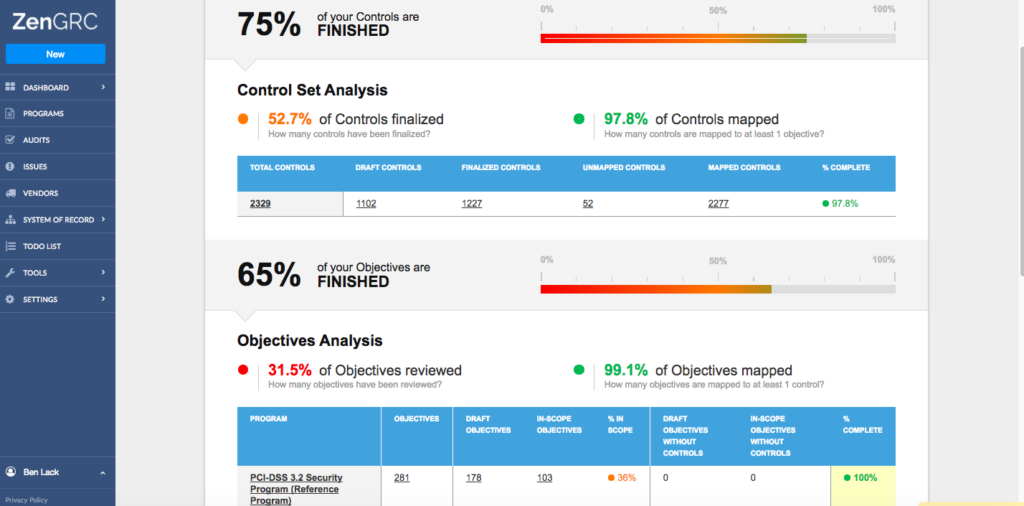
Deciding between ZenGRC and Archer comes down to a handful of concrete differences. Here’s what actually changes for your team if you choose us over Archer:
1. Nothing to configure before you start
Our data model already understands controls, risks, evidence, and audits as connected. Archer is a workflow engine that has to be configured into a GRC program first, which is where most of the cost and time goes.
2. One flat rate, not a module-by-module bill
Our pricing covers unlimited users, frameworks, and vendors at one rate. Archer prices by module and use case, so a growing program means a growing number of line items.
3. Live in weeks, not months or years
Most teams on our platform are live within weeks, guided by a named CSM included in the base subscription. Archer implementations commonly run 6 to 12 months or longer, and reviewers describe multi-year consulting engagements just to keep the system running.
4. HITRUST that connects natively
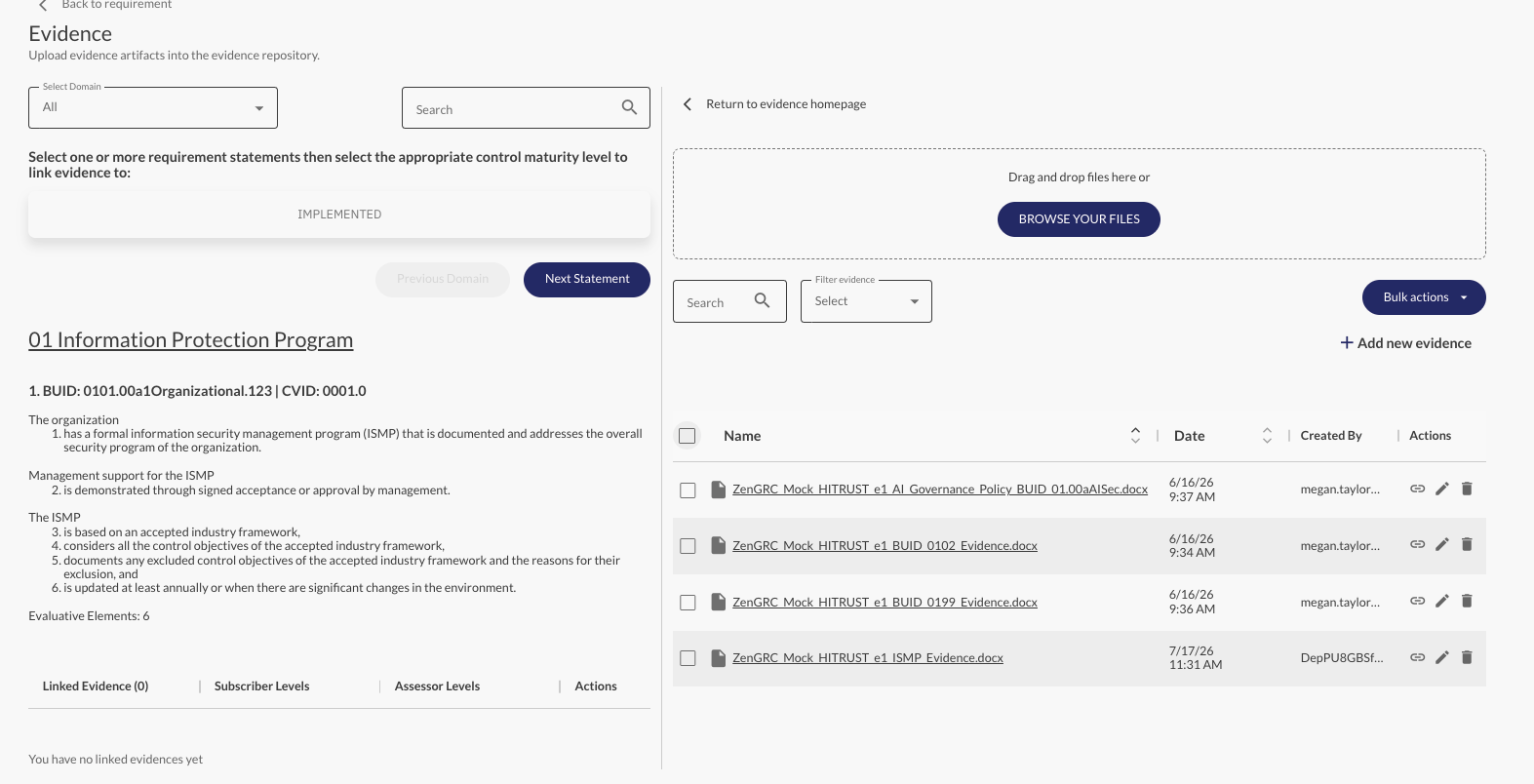
We connect you directly to MyCSF, with e1, i1, and r2 supported and evidence syncing both ways. Archer doesn’t name a MyCSF integration on its own product pages.
5. No certification required to run it
We don’t require a dedicated, certified administrator to operate day-to-day. Archer’s own training program, Archer Academy, exists because the platform typically needs one.
6. AI built for the daily compliance work
Our AI assessments automate scoping, control design, and gap analysis, the work a compliance team does continuously. Archer Evolv is a genuinely strong tool for tracking regulatory change, but it doesn’t replace the daily lift ZenGRC is built for.
Move Your Program From Archer to ZenGRC
A compliance program shouldn’t require a dedicated administrator, a certification course, and a multi-year consulting relationship just to stay running. That’s the tradeoff Archer asks large, heavily regulated enterprises to make in exchange for its depth, and for the right organization, it’s a fair trade. It’s not the trade most compliance teams running a handful of frameworks are looking to make.
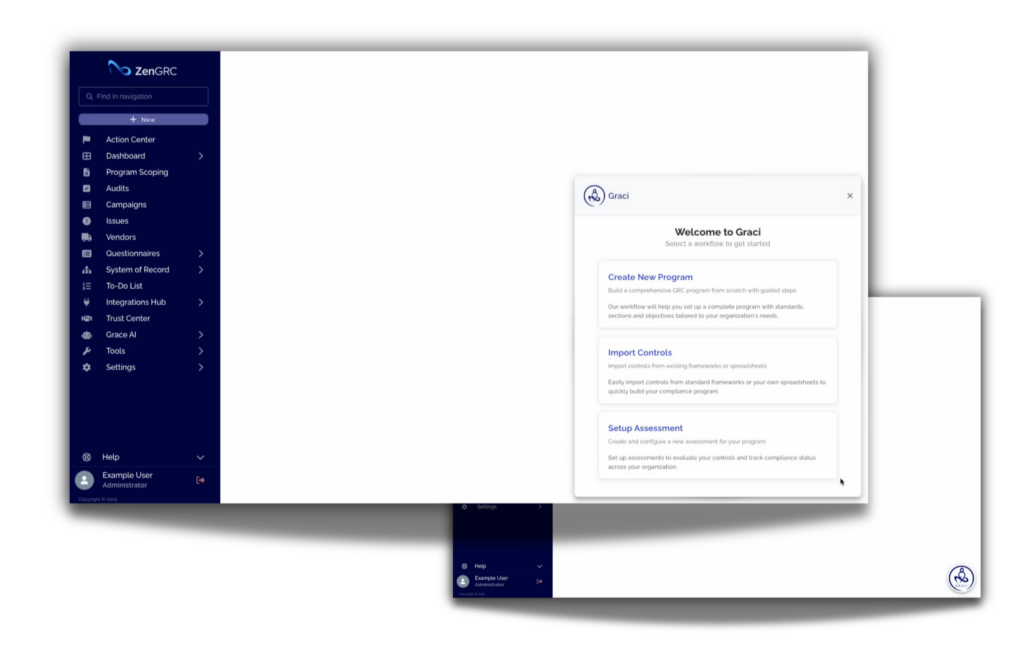
ZenGRC is built for the other side of that tradeoff. We’ll import your existing controls and evidence, map them across every framework you carry, and get you live with a named CSM guiding the process from day one, not a certified administrator you have to hire and maintain.
Book a demo today to see how we can get your next framework, audit, or vendor review live in weeks, not the months an Archer implementation typically takes.