
Summary
GRC implementations for teams juggling multiple frameworks typically run six to twelve months, and most of that time goes into designing a data model from scratch and migrating existing controls by hand. General-purpose and no-code platforms leave teams to build that structure themselves, while purpose-built platforms ship with it already modeled in. Ultimately, speed comes down to whether the data model and framework content already exist before onboarding starts, not how many features get promised on the sales call.
How GRC Enables Fast Onboarding Within Days
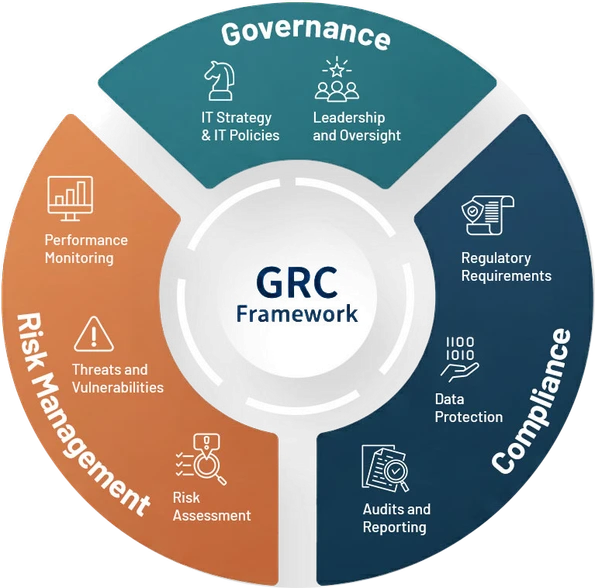
Most GRC platforms take months to get running because the platform doesn’t understand compliance yet. Someone has to build that understanding in first: designing how controls, risks, evidence, and audits connect, mapping frameworks, and configuring workflows before anyone tests a single control.
Fast onboarding comes down to what’s already true about the platform before a new customer logs in, and a handful of specific factors separate the GRC platforms that take days from the ones that take months.
1. A Purpose-Built Data Model, Not a Blank Canvas
The single biggest driver of implementation time is whether a platform’s data model already understands compliance concepts, or whether that structure has to be designed from scratch. No-code and general-purpose platforms are flexible, but flexibility means someone on your team, or a paid partner, has to build the relationships between controls, risks, evidence, and audits before the platform does anything useful. Purpose-built GRC platforms, like ZenGRC, skip that step.
2. AI That Takes the First Pass
AI-assisted scoping, control drafting, and gap analysis is becoming standard across modern GRC platforms, and they compress work that used to take weeks into days. Instead of a compliance team drafting control language and identifying framework overlaps by hand, AI can generate a first draft for a human to review.
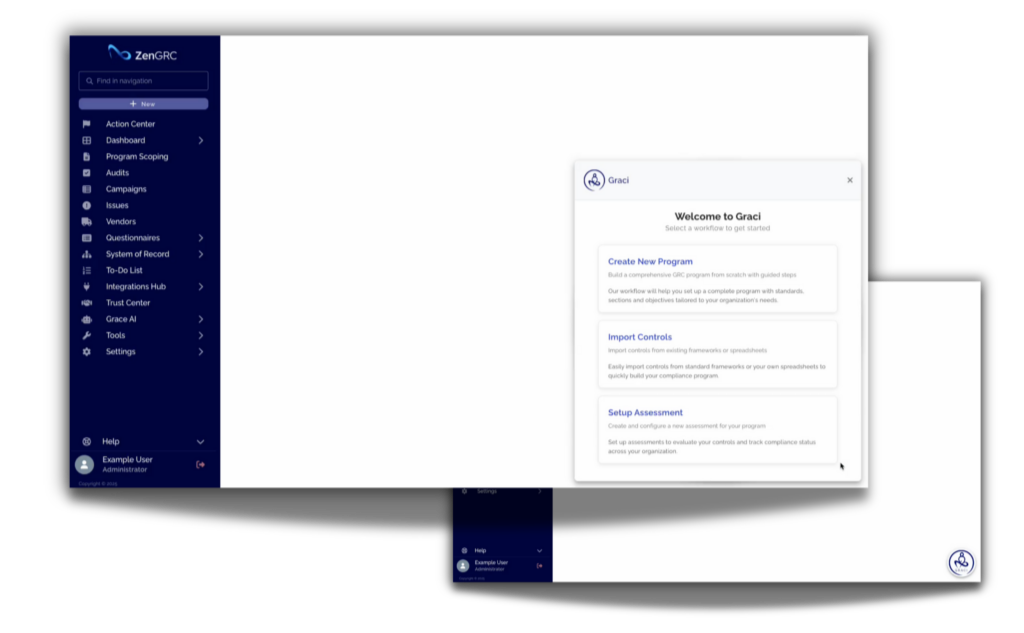
At ZenGRC, our AI assistant generates a new isolated model for each use, trained only on that customer’s instance data, and produces a first pass at scoping and control design within days of kickoff.
3. Framework Content That’s Already Loaded
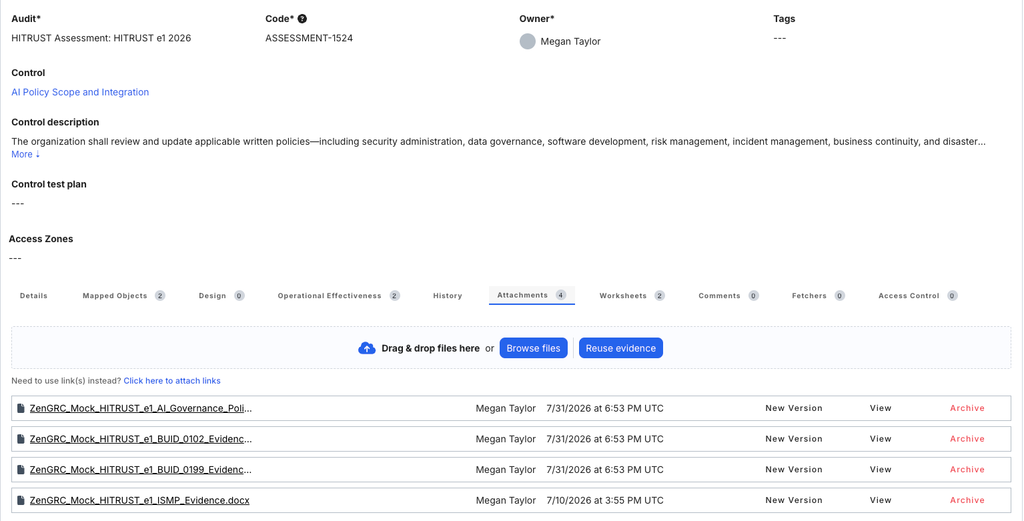
Platforms that ship with major frameworks already loaded, including HIPAA, SOC 2, ISO 27001, and HITRUST, remove the framework-by-framework setup that used to happen one at a time. Native cross-framework mapping goes further, since a control tested once can apply everywhere the frameworks overlap instead of getting rebuilt for each one.
Our platform carries content for 30+ standards out of the box, with this kind of mapping built into the data model rather than added as a configuration step.
4. A Named Contact Instead of a Services Queue
Implementation speed also comes down to the operating model, not just the software. Platforms that assign a dedicated point of contact from day one, someone who guides setup directly, tend to move faster than ones that route new customers through a professional services quote, a partner network, or a ticket queue.
All our customers get a named customer success manager before onboarding even starts, and that person stays on the account rather than handing it off once setup is done.
5. Integrations That Start Working Immediately
A lot of onboarding time, at any GRC vendor, goes to chasing evidence manually while integrations get configured one at a time. A deep, pre-built integration library shortens that considerably, since evidence starts flowing as soon as a connection is made instead of waiting on custom configuration. We connect you to 117+ systems, including AWS, Jira, ServiceNow, Splunk, and Tenable, and tag each artifact to the control it supports automatically.
See What That Looks Like With ZenGRC
GRC platforms are starting to ship with the compliance data model already built, framework content preloaded, and AI doing the first pass on scoping and control design, so onboarding becomes a matter of reviewing and refining an existing structure instead of constructing one from a blank canvas.
ZenGRC is built this way: framework content for 30+ standards loads before your first login, the platform’s AI-powered assessments run an initial pass on scoping and control design within days, and a named CSM guides setup from day one. Most teams are fully live within weeks, with real progress inside the first few days rather than months into a services engagement.
Book a demo today to see how we can get your next framework, audit, or vendor review live in days, not weeks.
Frequently asked questions
Why do GRC platform implementations typically take so long?
Most of the time goes into building a data model from scratch: designing how controls, risks, evidence, and audits connect before the platform can do anything useful. On general-purpose or no-code platforms, that work falls to the customer’s team or a paid implementation partner, which is usually where the months go.
What should I look for in a GRC platform if fast onboarding matters?
Four things tend to predict speed: a data model that’s preconfigured rather than built from scratch, framework content that’s preloaded, AI that can take a first pass at scoping and control design, and a dedicated point of contact instead of a services queue. ZenGRC is built around all four, which is why kickoff to live typically runs in weeks rather than months.
How fast can I get ZenGRC live specifically?
Most teams are fully live within weeks. Framework content is preloaded, and ZenGRC’s AI runs an initial pass on scoping and control design within the first few days, so the team is reviewing real work almost immediately instead of waiting on a build.
Do I need a dedicated admin to run a modern GRC platform?
It depends on the platform. No-code and open-architecture tools generally need someone who can build and maintain workflows. Purpose-built platforms don’t need that. ZenGRC’s data model and framework content are already built, so a team’s time goes into testing and audit prep instead of configuration.
Can I bring my existing controls and evidence to a new GRC platform?
Most platforms support this to some degree, though how much manual remapping is required varies. ZenGRC imports existing controls and evidence during implementation and maps them across every framework a customer carries, so that work doesn’t have to be rebuilt.
Is fast setup only realistic for simple, single-framework programs?
No, and this is a common misconception. Speed comes from the data model, not from the size of the program. ZenGRC’s native cross-framework mapping means a control tested once can apply to HIPAA, SOC 2, and HITRUST at the same time, rather than requiring separate setup for each one.