
Comparing 10 Drata Alternatives & Why ZenGRC is a Better Alternative for Multi-Framework Compliance
Quick Summary
ZenGRC, Vanta, and Hyperproof stand out among 10 Drata alternatives for SOC 2, HIPAA, and multi-framework programs. ZenGRC suits mid-market teams needing cross-framework mapping, Vanta fits fast SOC 2 startup setups, and Hyperproof supports structured mid-market audit workflows.
These three platforms lead our list of Drata alternatives:
| # | Platform | Starting Price |
| 1 | ZenGRC | Custom, requires a demo |
| 2 | Vanta | Reported estimates ~$10,000–$80,000/year |
| 3 | Hyperproof | Reported estimates $12,000/year |
Why Look For Alternatives to Drata?
The compliance automation market has matured past the point where one tool fits every stage. Drata owns the startup SOC 2 niche. But if you are a mid-market compliance leader managing three frameworks, a risk register, and vendor assessments, you already know the gap between what Drata offers and what your program demands.
Here’s where teams hit limits when programs expand.
- Multi-framework complexity: While Drata now offers cross-mapping, HITRUST still requires manual control setup that users call time-consuming.
- Pricing escalates as frameworks and integrations multiply: Teams report costs climbing faster than expected with additional frameworks like ISO 27701.
- Functional gaps persist:
- Audit management remains shallow compared to dedicated platforms
- Risk quantification exists but lacks depth for complex programs
- Vendor risk capabilities are immature for stringent TPRM needs
- Workflow friction drives searches too: When integrations break, teams fall back into manual processes. For lean teams managing continuous compliance across multiple frameworks, the 40-plus hour audit prep cycle becomes unsustainable without a unified GRC that scales.
In this article, we break down ten Drata alternatives for SOC 2, HIPAA, and multi-framework programs. We rank each by how well it serves teams that have outgrown point solutions but do not need enterprise complexity.
10 Best Drata Alternatives Compared
Below is a summary of the platforms we will cover in this review:
| # | Platform | Best for | Starting Price | Compliance Framework |
| 1 | ZenGRC | Unified GRC with cross-framework mapping, AI, and flat-rate pricing for mid-market teams | Custom, requires a demo | 40+ including SOC 2, ISO 27001, HIPAA, HITRUST, NIST, PCI DSS, CMMC |
| 2 | Vanta | Quick setup for SOC 2 and ISO 27001 with deep integration ecosystem | Reported estimates ~$10,000–$80,000/year | 35+ including SOC 2, ISO 27001, HIPAA, GDPR, PCI DSS |
| 3 | Hyperproof | Good mid-market peer with native audit management and intuitive control mapping | Reported estimates $12,000/year | 50+ including SOC 2, ISO 27001, HIPAA, HITRUST, NIST, PCI DSS, CMMC, FedRAMP, GDPR |
| 4 | Secureframe | Good international frameworks and faster expansion into non-US markets | Reported estimates $7,500 to $60,000/year | 40+ frameworks including SOC 2, ISO 27001, HIPAA, PCI DSS, FedRAMP, CMMC, ISO 42001 |
| 5 | LogicGate | Risk-first GRC with powerful no-code workflow automation for custom processes | Reported estimates ~$40,000 to $150,000+/year | 30+ frameworks including ISO 27001, NIST, SOC 2, HIPAA, PCI DSS |
| 6 | Onspring | Configurable no-code platform for IT audit and compliance teams replacing spreadsheets | Reported estimates $20,000 to $78,000/year | Multiple frameworks including SOC 2, ISO 27001, SOX, NIST |
| 7 | StandardFusion | Canadian GRC with strong privacy, CMMC, and government contractor workflows | Reported estimates, $21,000 to $72,000/year | CMMC, GDPR, PIPEDA, SOC 2, ISO 27001, NIST, HIPAA |
| 8 | Apptega | Framework-centric cybersecurity program management with MSSP portal | Reported estimates, $9,950/year | 30+ including NIST CSF, CIS, CMMC, SOC 2, HIPAA |
| 9 | Optro (Formerly AuditBoard) | Enterprise SOX, internal audit, and risk management for large public companies | Custom, requires a demo | 40+ frameworks including SOC 2, ISO 27001, HIPAA, GDPR, NIST |
| 10 | OneTrust | Broad governance platform covering GRC, privacy, ESG, and ethics | Custom, requires a demo | Includes privacy, security, ethics, ESG, GDPR, CCPA, HIPAA, ISO 27001 |
1. ZenGRC
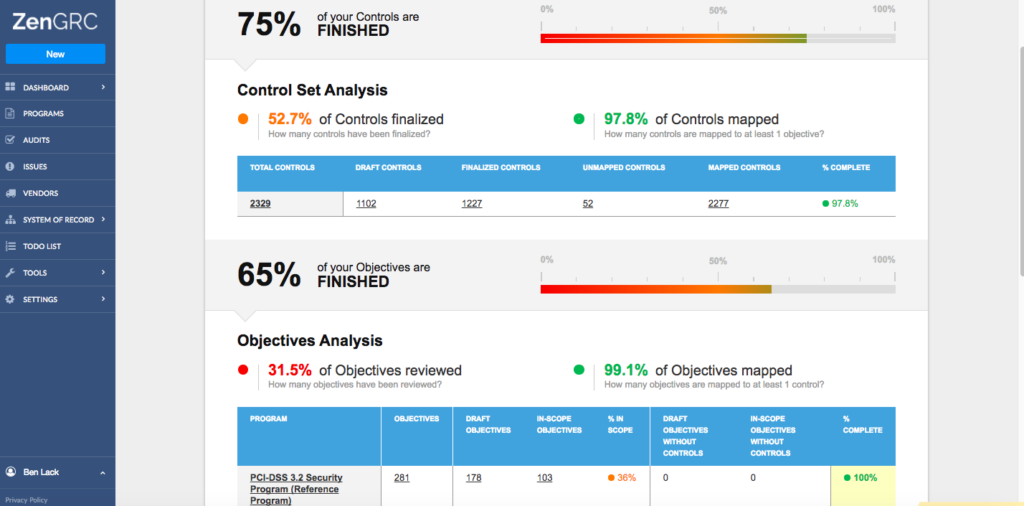
ZenGRC is a unified GRC platform built for mid-market teams that have outgrown point solutions but do not need enterprise complexity. Unlike Drata, which focuses narrowly on continuous compliance automation, ZenGRC handles multi-framework programs, audit management, risk, and vendor management in one system with cross-framework control mapping.
Key Features
- Cross-Framework Control Mapping: Test once and apply evidence across SOC 2, HIPAA, HITRUST, and 40+ frameworks.
- GRACI AI: Agentic AI trained only on your company data for control design, gap analysis, and program scoping.
- Flat-Rate Unlimited Pricing: No per-framework or per-user fees with predictable annual costs.
- Dedicated Implementation: Named CSM and real phone support included, not self-serve onboarding
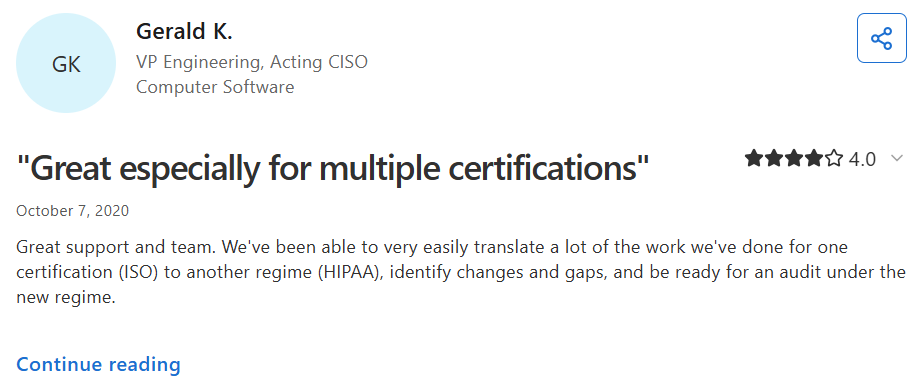
- HITRUST Integration: One of only four featured HITRUST partners with direct API and MyCSF integration
Pricing
- Varies based on frameworks, users, and deployment needs. Book a demo to determine exact pricing figures
Pros
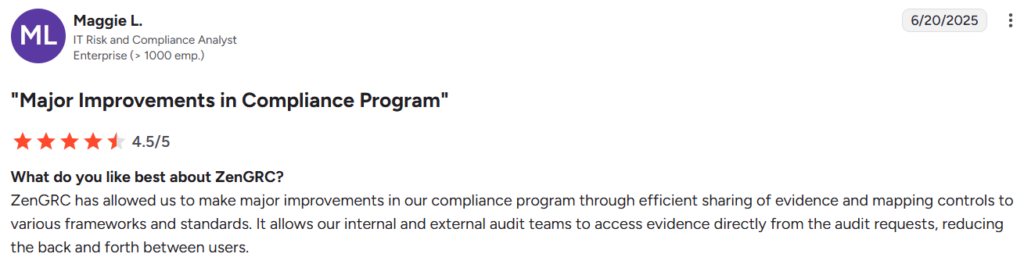
- Users report cutting audit prep time by up to 80% with evidence reuse across frameworks
- Single-tenant architecture with contractual guarantee that data is never used for LLM training
- Third-party risk and vendor questionnaires managed without a separate tool
- Healthcare companies highlight the combined HIPAA, HITRUST, and SOC 2 workflow
Cons
- Teams of one to two people may find the full platform more than they need
Best For: Mid-market compliance teams of 3 to 10 professionals managing multiple frameworks simultaneously, especially in healthcare and financial services.
2. Vanta
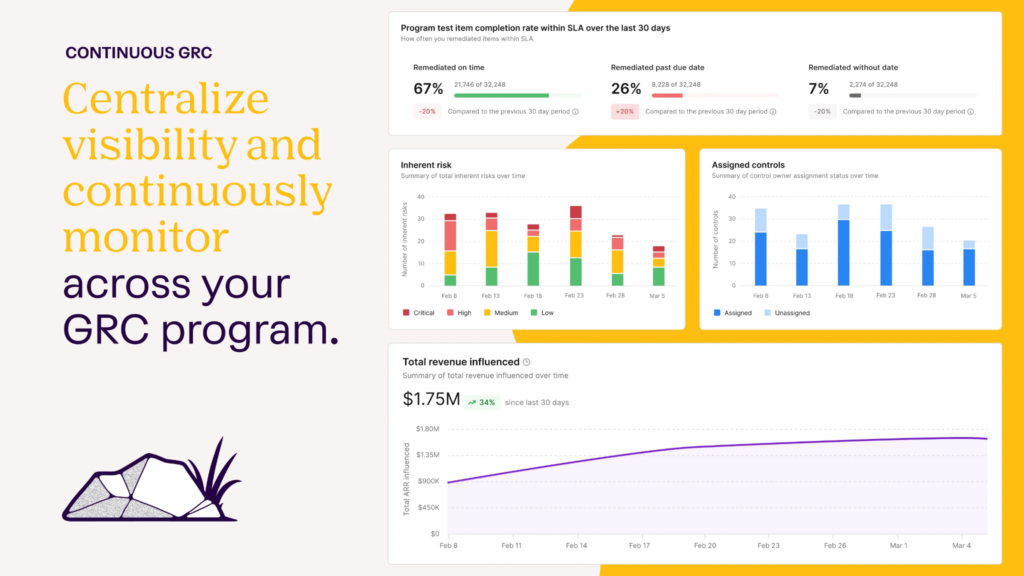
Vanta is a well-known name in the compliance automation space. It excels at continuous monitoring for SOC 2 and ISO 27001 with deep cloud infrastructure integrations. Where it stands apart from Drata is its broader policy template library and slightly more mature trust center functionality for customer-facing security posture.
Key Features
- Continuous Monitoring: Automated evidence collection from AWS, GCP, Azure, and 200+ integrations.
- Policy Builder: Pre-built security policies with version control and auditor-friendly formatting.
- Trust Center: Public-facing security page to share compliance status with prospects.
Pricing
- Reported estimates range from ~$10,000 to $80,000+ per year
Pros
- Initial SOC 2 readiness often achieved within weeks
- Deep developer tool and identity provider integrations reduce manual work
- Self-serve onboarding with minimal implementation overhead
Cons
- Integration gaps for non-standard apps require manual workarounds
- Vanta’s risk module is basic and not easily customizable
Best For: Startups and small teams seeking fast SOC 2 or ISO 27001 automation with minimal setup friction.
Related: see how ZenGRC is the best Vanta alternative for mid-market teams.
3. Hyperproof
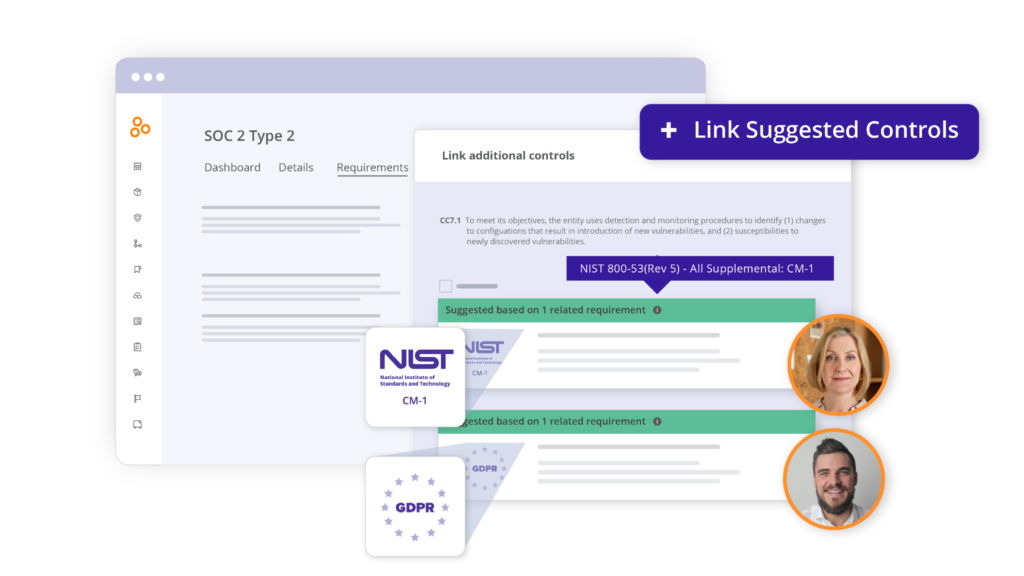
Hyperproof is a mid-market GRC platform for teams outgrowing compliance automation point tools. It differentiates from Drata with stronger cross-framework mapping and native audit management capabilities, making it a reasonable next step for teams running simultaneous SOC 2, ISO 27001, and HIPAA programs.
Key Features
- Unified Controls: Map one control to multiple frameworks and track compliance across all simultaneously.
- Audit Management: Built-in audit workflows, evidence requests, and auditor collaboration portals.
- Risk Register: Link risks to controls and track mitigation progress with timeline views.
Pricing
- Reported estimates start around $12,000/year
Pros
- Intuitive control mapping reduces duplicate testing effort
- Strong audit collaboration features for external auditor management
- Customer support responsiveness rates above industry average
Cons
- Native reporting is limited. Teams need to work around it for detailed analysis
- Unintuitive interface for users new to compliance automation
Best For: Compliance teams transitioning from spreadsheets to their first structured GRC platform with multi-framework requirements.
4. Secureframe
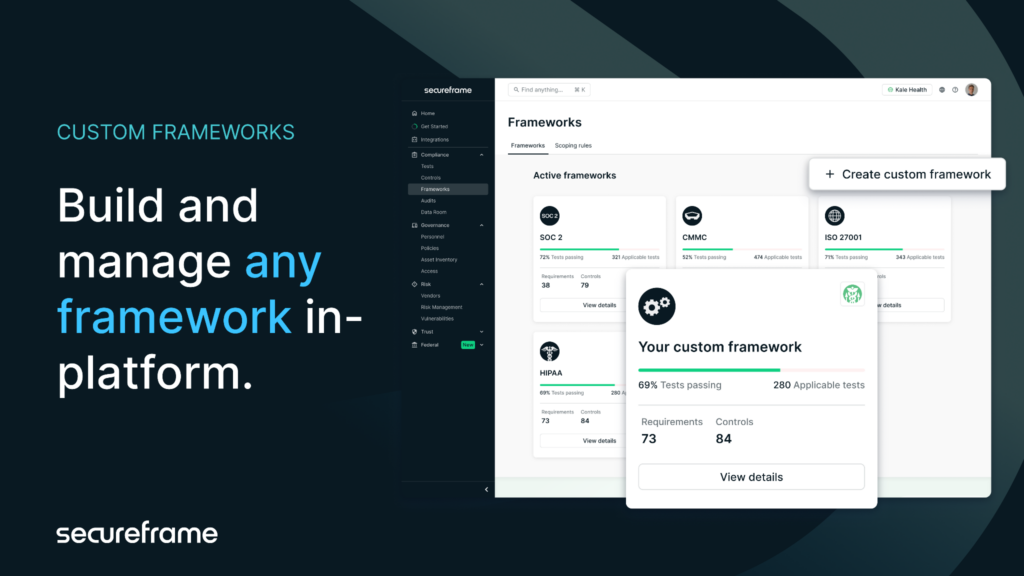
Secureframe is particularly strong in international frameworks and faster expansion into non-US markets. It stands apart from Drata with broader framework coverage, including CMMC, NIST, and custom framework support alongside core standards like GDPR, PCI DSS, and SOC 2.
Key Features
- Auto-Evidence Collection: Continuous monitoring across cloud infrastructure, HRIS, and developer tools.
- International Frameworks: Native support for GDPR, SOC 2, ISO 27001, HIPAA, PCI DSS, CMMC, and NIST.
- Policy Management: Pre-built security policies with version control and auditor-friendly formatting.
Pricing
- Estimated annual costs start at roughly $7,500 and scale up to over $60,000
Pros
- Personnel compliance automation reduces manual HR coordination
- International framework breadth helps global operations avoid multiple tools
- Onboarding and implementation support rated above typical self-serve platforms
Cons
- Advanced risk management and vendor assessment require add-on modules
- Reporting and dashboard customization lag behind dedicated GRC platforms
Best For: Companies with international operations needing GDPR and multi-regional compliance alongside US frameworks.
5. LogicGate
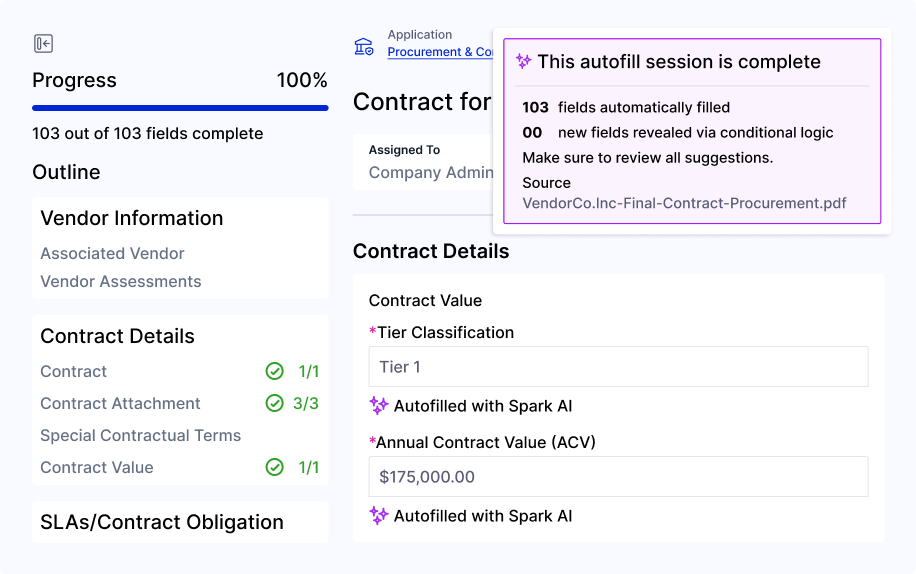
LogicGate is a risk-first GRC platform with powerful no-code workflow automation that appeals to teams needing custom processes beyond standard compliance checklists. It differentiates from Drata by starting with risk and control design rather than evidence automation.
Key Features
- No-Code Workflow Builder: Design custom risk, compliance, and audit processes without developer resources.
- Risk Quantification: Calculate inherent and residual risk with custom scoring methodologies.
- Control Library: Build and map custom controls to any framework or internal standard.
Pricing
- Estimated annual costs typically range from ~$40,000 to $150,000+
Pros
- Highly flexible workflows adapt to organization-specific risk processes
- No-code engine reduces dependency on professional services for changes
- Proactive and consultative customer success engagement
Cons
- Comes with a steep learning curve as teams need dedicated admin time
- Evidence collection is more manual than newer compliance-first rivals
Best For: Organizations with complex, custom risk frameworks or heavily regulated operational environments requiring tailored workflows.
6. Onspring
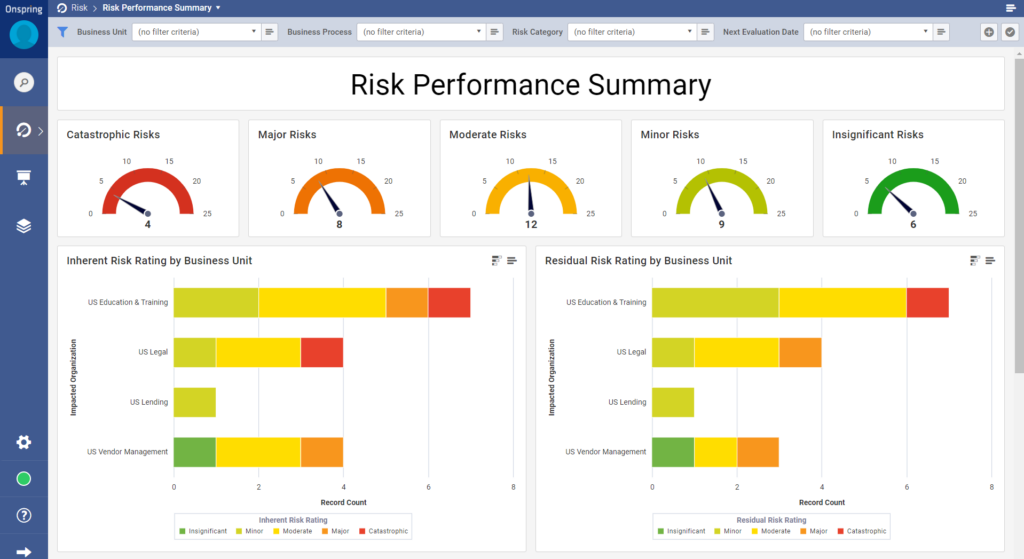
Onspring is a highly configurable, no-code GRC platform that helps teams replace spreadsheets and disconnected tools. It differentiates from Drata by letting users build custom applications for audit, compliance, risk, and vendor management without developer resources.
Key Features
- Custom Data Model: Create custom fields, objects, and relationships across GRC domains without coding.
- SOX and Audit Workflows: Built-in SOX compliance, audit planning, and internal audit management.
- Vendor Portal: External third-party access for questionnaire completion and document upload.
Pricing
- Reported estimates suggest pricing starts around $20,000 to $78,000 per year
Pros
- Replaces spreadsheet-based processes with configurable automation
- Straightforward data import and migration from legacy tools
- Vendor portal reduces email-based questionnaire management
Cons
- Continuous evidence collection from cloud infrastructure is not native
- Field deletion and some data structure changes have limitations
Best For: IT audit teams and compliance programs transitioning from spreadsheets or SharePoint that need configurable structure without enterprise complexity.
7. StandardFusion
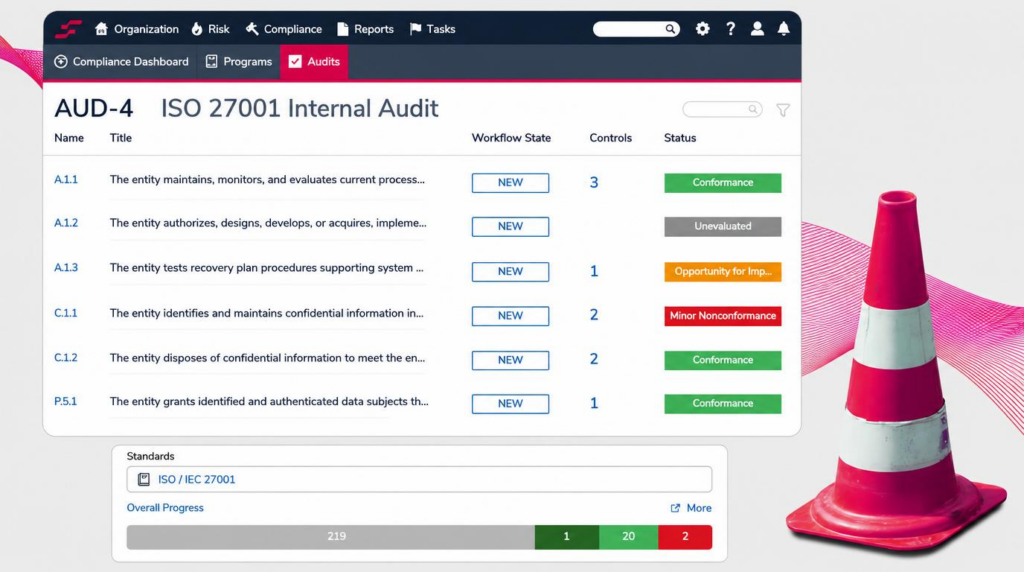
StandardFusion is a Canadian GRC platform with strong traction in healthcare, government contracting, and privacy-conscious organizations. It differentiates from Drata with deeper privacy management capabilities and CMMC-specific workflows for defense contractors.
Key Features
- Privacy Management: Data mapping, DPIA workflows, and privacy rights request tracking.
- CMMC Support: Pre-built controls and assessment workflows for defense contractor compliance.
- Risk and Compliance: Unified risk register with control mapping across multiple standards.
Pricing
- Reported purchases range from $21,000 to $72,000 per year
Pros
- Strong data residency and privacy compliance for Canadian and European users
- CMMC and government contractor workflows exceed most mid-market alternatives
- Privacy management module praised by organizations with GDPR and PIPEDA obligations
Cons
- US-market presence and healthcare-specific integrations are narrower than ZenGRC
- Automated evidence collection from cloud infrastructure and SaaS tools is limited
Best For: Canadian organizations, government contractors pursuing CMMC, and companies with heavy privacy regulation requirements.
8. Apptega
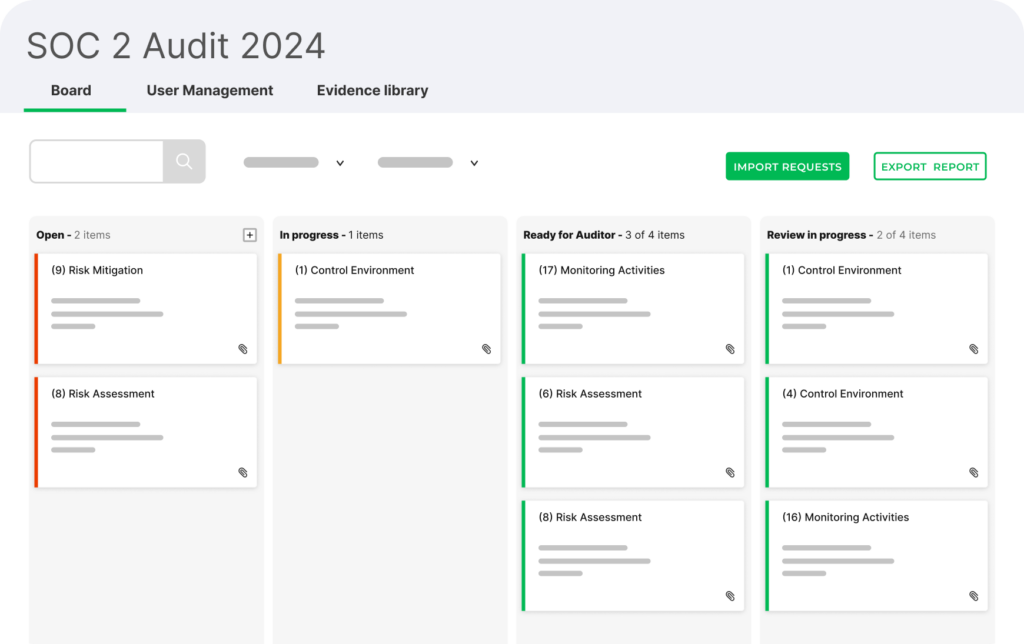
Apptega is a framework-centric GRC platform built around cybersecurity program management with strong MSSP and advisory firm adoption. It stands apart from Drata by organizing the entire platform around framework implementations rather than continuous monitoring, making it good for teams building programs from scratch.
Key Features
- Framework Marketplace: Pre-built implementations for 30+ frameworks, including NIST CSF, CIS, and CMMC.
- Program Scoring: Maturity scoring and gap analysis against framework requirements.
- Task Management: Assigned remediation tasks with deadlines and progress tracking.
Pricing
- Reported estimates indicate pricing starts at approximately $9,950 per year
Pros
- MSSP portal is built for scale, not added as an afterthought
- Translates technical risk data into actionable business insights for leadership
- Ability to start with one framework and expand without rebuilding the entire program
Cons
- The interface is unintuitive and overly cluttered
- Search functionality across compliance data is missing
Best For: Organizations building cybersecurity programs from scratch with framework-specific guidance, especially those working with MSSPs or virtual CISOs.
9. Optro (Formerly AuditBoard)
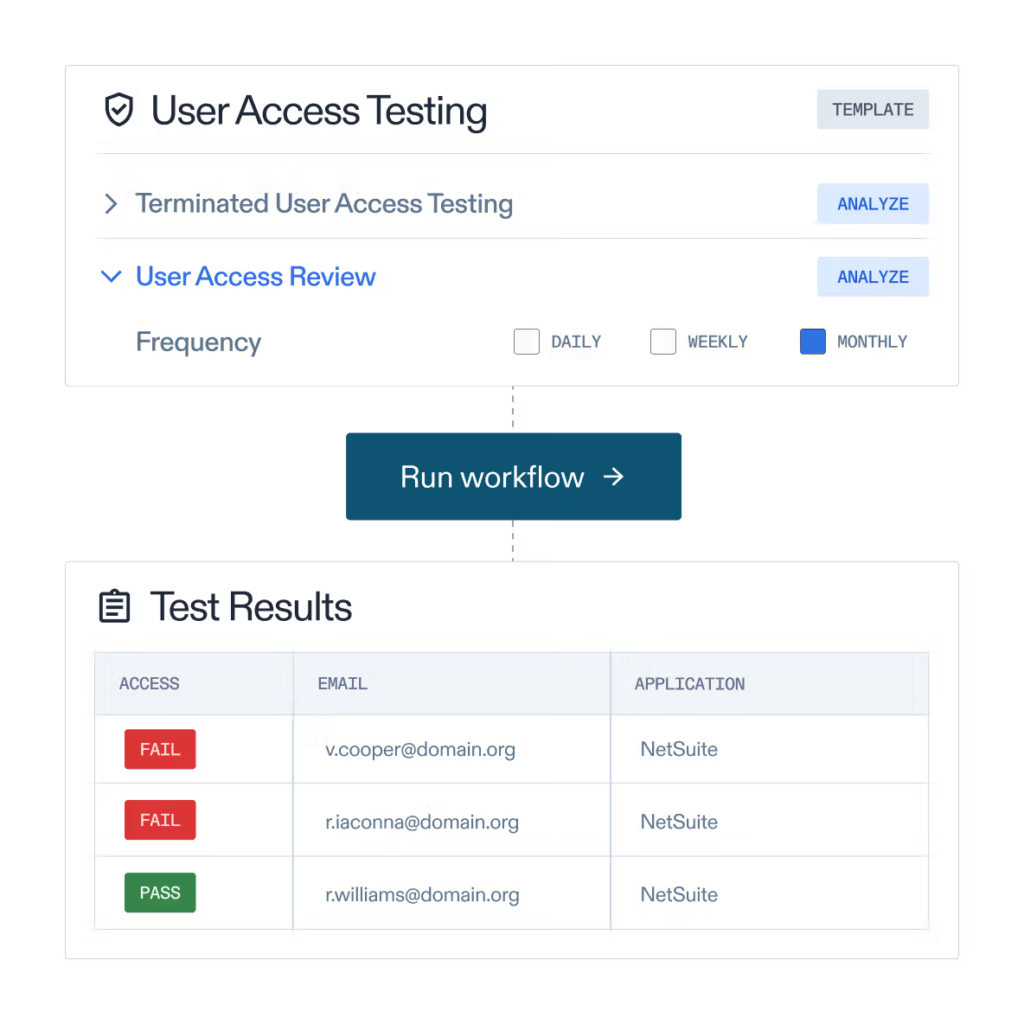
Optro (formerly AuditBoard) is a platform for SOX, internal audit, and enterprise risk management in large public companies. It differentiates from Drata entirely by market focus, serving as an example of what happens when compliance automation graduates into full enterprise audit transformation with dedicated methodology and workflow rigor.
Key Features
- SOX and Internal Audit: Purpose-built workflows for control testing, deficiency tracking, and certification.
- Risk Management: Enterprise risk register with heat maps, trend analysis, and board reporting.
- Workpapers: Digital audit workpaper management with review and sign-off controls.
Pricing
- Pricing is customized based on your specific module selection, company size, and integration requirements
Pros
- Strongest SOX and internal audit platform for public companies
- Workpaper and review workflow exceeds mid-market competitors
- Enterprise-grade board and executive reporting
Cons
- Built for enterprise audit teams of 20-plus professionals
- Pricing and implementation place it far outside Drata’s category
Best For: Public companies and large enterprises with dedicated internal audit departments managing SOX and multi-jurisdictional regulatory programs.
10. OneTrust
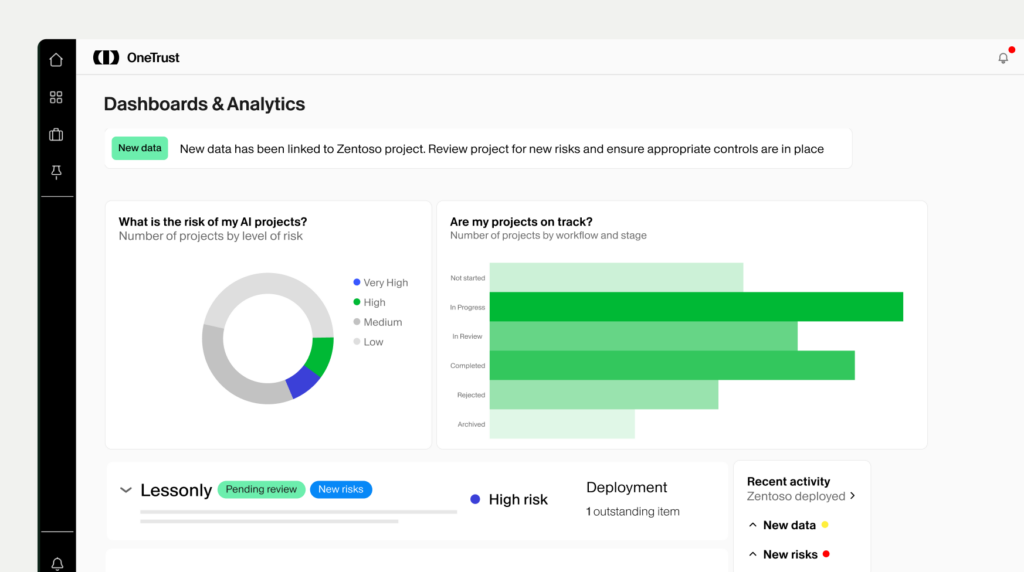
OneTrust is a GRC and privacy platform covering compliance automation, ESG, privacy, and ethics. It stands apart from Drata by offering breadth across governance domains, making it a fit for enterprises that need a single vendor for all regulatory and risk functions.
Key Features
- Privacy and Consent: Global privacy management, cookie consent, and data governance.
- GRC and Compliance: Policy management, risk register, control testing, and audit workflows.
- ESG and Sustainability: Carbon accounting, supplier sustainability, and ESG reporting.
Pricing
- Pricing is fully custom-quoted and scales with modules and usage
Pros
- Breadth across governance functions in one vendor relationship
- Privacy and consent management is widely adopted
- Extensive vendor ecosystem and professional services network
Cons
- Implementation scoping confuses teams outside GRC
- Platform feels bloated for teams needing compliance automation only
Best For: Global enterprises with dedicated GRC, privacy, and legal teams requiring a single vendor for governance across all domains.
Streamline Multi-Framework Compliance with ZenGRC
Your compliance program deserves more than point-solution automation. The right platform cuts audit prep time, eliminates spreadsheet brute-forcing, and gives your board real-time risk visibility.
ZenGRC does this with cross-framework control mapping, GRACI AI trained only on your data, and flat-rate pricing that scales predictably. Teams of 3 to 10 professionals go live in weeks, not months, with dedicated implementation support included. Healthcare and financial services companies specifically benefit from combined HIPAA, HITRUST, and SOC 2 workflows.
See how ZenGRC fits your program. Book a demo or take a product tour today.