Founded in 2009, ZenGRC offers robust, intuitive products that help organizations graduate from manual processes and point solutions, turning compliance and risk management into a source of business advantage. We help organizations better navigate the complexities of governance, risk, and compliance.
ZenGRC’s Comprehensive GRC Implementation Guide
Implementing a Governance, Risk, and Compliance (GRC) program can feel overwhelming. Between managing multiple regulatory frameworks, coordinating across departments, and ensuring continuous compliance, organizations often struggle to know where to begin.
This GRC implementation guide walks you through the essential steps, debunking common myths and providing actionable strategies to streamline your compliance journey from day one.
GRC implementation guide:
- Understanding Modern GRC
- Dispelling Common GRC Myths
- Building Your GRC Foundation
- Conducting Risk Assessment
- Harmonizing Multiple GRC Frameworks
- Implementing Vendor Risk Management
- Establishing Testing Protocols
- Leveraging Technology for Success
- The ZenGRC Advantage
- Moving Forward with Confidence
Let’s dive into this GRC implementation guide and explore each critical component.
Understanding Modern GRC
GRC brings together three critical business functions:
- Governance: establishing policies and oversight
- Risk management: identifying and mitigating threats
- Compliance: meeting regulatory requirements
When properly implemented, GRC transforms these traditionally siloed functions into an integrated system that protects your organization while enabling growth.
Modern GRC software platforms have revolutionized what’s possible. Organizations can now go live in weeks rather than months, business users can manage complex requirements without technical expertise, and mid-market companies can access enterprise-grade functionality at reasonable costs. The key is understanding that successful implementation isn’t about perfection on day one: it’s about building a sustainable framework that grows with your organization.
Dispelling Common GRC Myths

Throughout this GRC implementation guide, we’ll address these outdated assumptions. Many businesses delay GRC initiatives because they believe implementations require nearly a year, demand dedicated technical staff, or come with prohibitive costs. These assumptions reflect outdated realities.
Today’s leading GRC solutions offer rapid deployment timelines, user-friendly interfaces designed for business professionals, and flexible pricing models that scale with organizational needs. The reality is that maintaining manual processes and spreadsheet-based compliance actually costs more in the long run through inefficiency, errors, and missed requirements.
Building Your GRC Foundation
Successful implementation starts with establishing a solid foundation. This begins by creating a comprehensive requirements library that catalogs all statutory, regulatory, and contractual obligations affecting your organization. Think of this library as your single source of truth: a centralized inventory that maps requirements to business functions and identifies associated risks.
Working with subject matter experts and business unit leaders, document each applicable regulation and standard. Map these requirements to relevant departments and processes, ensuring nothing falls through the cracks. This upfront investment in organization pays dividends throughout the implementation process and beyond.
Conducting Risk Assessment

Once you understand your compliance landscape, conduct a thorough risk assessment. This involves evaluating both inherent risk (the potential for violations without any controls) and residual risk (what remains after implementing controls). This assessment becomes your roadmap for prioritizing implementation efforts and ongoing testing schedules.
High-residual-risk areas demand more frequent attention (quarterly testing or even more often). Medium-risk areas might require semiannual review, while low-risk items can be assessed annually. This risk-based approach ensures you’re directing resources where they matter most.
Harmonizing Multiple GRC Frameworks
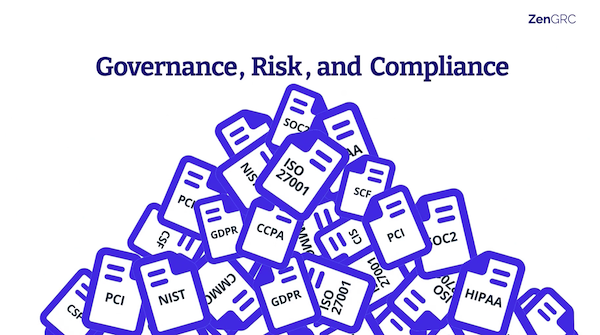
One of the biggest implementation challenges comes from managing multiple compliance governance, risk, and compliance frameworks simultaneously. Organizations subject to SOC 2, GDPR, ISO 27001, HIPAA, or other standards often duplicate efforts unnecessarily, treating each framework as a separate mountain to climb.

The solution lies in recognizing framework overlaps. Most regulations share common fundamental objectives around data protection, access controls, risk assessment, and incident response. By mapping controls across frameworks, you can identify where a single implementation satisfies multiple requirements.
Create a unified control framework that encompasses all obligations: your master set of controls that collectively addresses every compliance requirement. This harmonized approach implements the “test once, comply many” strategy, dramatically reducing redundant work while maintaining comprehensive coverage.
Implementing Vendor Risk Management
For many organizations, third-party vendors represent significant compliance risk. Effective implementation must address vendor management from the very first interaction. Your vendor onboarding process establishes the security foundation for these critical relationships.
Strong vendor onboarding includes comprehensive risk assessment based on data access levels and operational integration depth. Collect and verify essential documentation including security policies, compliance certifications, insurance certificates, and audit reports. Establish clear contractual expectations around performance metrics, security requirements, and incident response obligations.
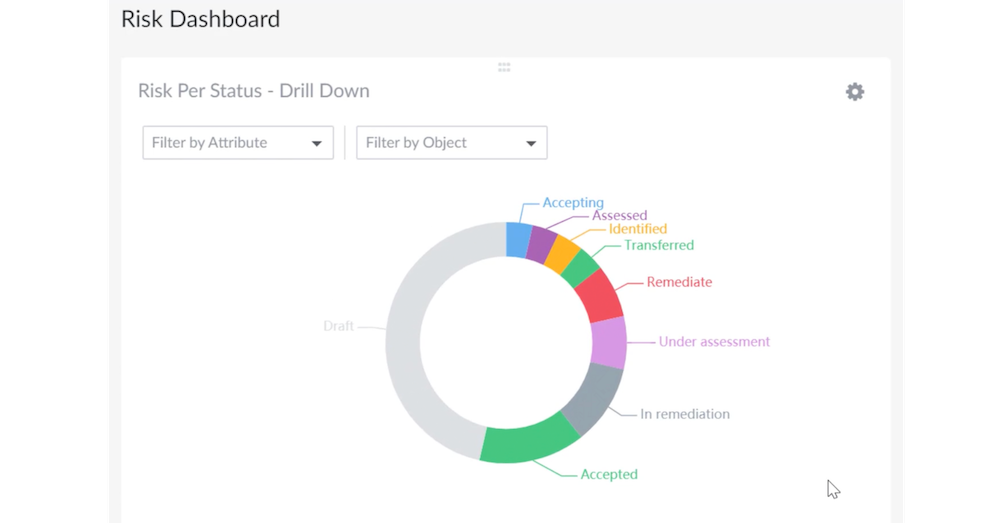
Manual vendor management creates dangerous gaps through scattered documentation and missed compliance checks. Centralized GRC platforms automate evidence collection, streamline security questionnaires, and provide real-time visibility into vendor risk status across your entire ecosystem.
Establishing Testing Protocols
Compliance isn’t a one-time achievement; it requires ongoing validation. Develop a testing methodology that defines your approach, sampling methods, violation response processes, and remediation procedures. Communicate this methodology clearly to all stakeholders so teams understand expectations.
Schedule testing based on residual risk levels identified in your risk assessment. Document all testing activities and preserve evidence of results. When issues arise, follow a structured issues management process that tracks problems from identification through remediation and validates that corrective actions work as intended.
Leveraging Technology for Success
While strategic planning is essential, technology makes implementing GRC scalable and sustainable. Manual approaches using spreadsheets and email chains quickly become unmanageable as complexity grows, leading to version control problems, inefficient evidence retrieval, and limited compliance visibility.
Modern GRC platforms centralize all compliance data, automate framework mapping, streamline evidence workflows, and provide real-time dashboards showing your compliance posture. Look for solutions offering pre-built framework content, flexible mapping capabilities, customizable control libraries, and comprehensive cross-framework reporting.
AI-powered GRC solutions take this further, providing intelligent assistance with program scoping, control design, and audit structure generation. These capabilities allow lean teams to accomplish more without additional headcount while minimizing time-to-value.
The ZenGRC Advantage
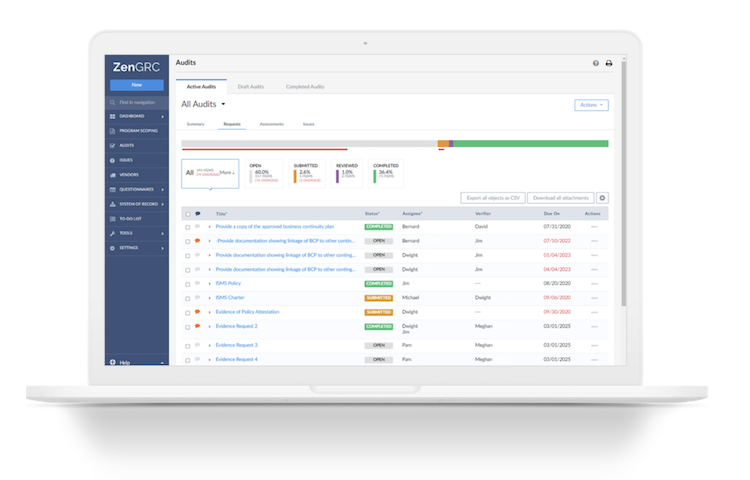
ZenGRC supports successful implementation through a flexible, framework-agnostic approach. Our GRC software platform comes with over 30 standard frameworks out of the box while supporting custom frameworks for specific organizational needs. Using the Secure Control Framework as a foundation, ZenGRC enables efficient control mapping across multiple requirements.
Key capabilities include centralized vendor risk management with automated workflows, AI-powered assistance for analyst-level GRC work, integrated compliance testing and evidence management, and simple pricing without hidden costs. Organizations implementing ZenGRC achieve operational readiness within weeks, not months, with minimal business disruption.
Moving Forward with Confidence
If anything we hope that our GRC implementation guide illustrated that this process doesn’t require perfection. It requires commitment to building systematic processes that protect your organization while enabling growth. By establishing a strong foundation, leveraging framework harmonization, implementing robust vendor management, and utilizing modern technology platforms, you transform compliance from an overwhelming burden into a manageable, efficient program.
The regulatory landscape will continue evolving, but organizations with strategic implementation adapt quickly while maintaining comprehensive coverage. Start with a clear understanding of your requirements, focus on areas of highest risk, and leverage technology to scale your efforts efficiently.
Ready to transform your GRC program? Modern platforms make implementation faster, easier, and more cost-effective than ever before. The question isn’t whether you can afford to implement GRC; it’s whether you can afford not to. Ready to put this GRC implementation guide into action?
Discover how modern technology can help you achieve compliance faster and more efficiently. Book a demo to see how the right platform transforms compliance from a challenge into a competitive advantage.