
Founded in 2009, ZenGRC offers robust, intuitive products that help organizations graduate from manual processes and point solutions, turning compliance and risk management into a source of business advantage. We help organizations better navigate the complexities of governance, risk, and compliance.
In today’s rapidly evolving regulatory landscape, organizations face mounting pressure to maintain robust compliance programs while managing limited resources. The choice between automated audit solutions vs. traditional compliance methods has become critical as businesses seek more efficient ways to meet their governance, risk, and compliance obligations.
Understanding Traditional Compliance Methods
Traditional compliance methods rely heavily on manual processes, spreadsheet-based tracking, and periodic audits. Organizations monitor regulatory changes through manual review of publications, update policies through extensive documentation reviews, and conduct employee training via in-person sessions. Compliance tracking happens through spreadsheets and paper records, while audits require weeks or months of preparation as teams manually compile evidence and documentation.

The challenges become apparent when considering the volume of modern compliance obligations. Between international regulations like GDPR, industry standards like HIPAA and PCI DSS, and emerging data privacy requirements, compliance teams struggle to maintain comprehensive oversight using manual approaches. Traditional audits create significant workload burdens, with teams scrambling to gather scattered documentation and respond to auditor requests.
The Rise of Automated Audit Solutions
Automated audit solutions represent a fundamental shift in compliance management. These platforms centralize compliance data, enabling organizations to maintain a single source of truth for all GRC activities. Continuous monitoring replaces periodic checks, with systems automatically scanning for control effectiveness and generating alerts when issues arise. Advanced analytics provide insights into compliance trends and potential vulnerabilities before they become critical problems.

Workflow automation guides stakeholders through predefined processes, ensuring consistency in risk assessments and remediation efforts. Integration capabilities connect platforms with existing enterprise systems, pulling relevant data without manual entry. Most significantly, automated solutions provide real-time risk assessments rather than waiting for quarterly or annual audits to identify vulnerabilities.
Key Differences in Approach
Compliance Evidence Collection and Documentation
Traditional methods require manual evidence gathering through document requests, physical inspections, and personnel interviews. This labor-intensive process creates significant burdens and risks incomplete documentation. Automated solutions maintain continuous documentation through integrated systems that capture evidence automatically, creating comprehensive audit trails accessible through centralized repositories.

Scalability and Scope
Traditional approaches struggle to scale with organizational growth or regulatory complexity. Each new framework requires additional manual processes and coordination. Automated solutions scale efficiently regardless of size, managing one framework or dozens simultaneously. Cross-mapping capabilities identify control overlaps between frameworks, reducing redundant work.
Response Time and Agility
Under traditional methods, issues identified during periodic audits may have existed for months before detection. Remediation requires manual planning and tracking. Automated systems detect issues immediately and initiate remediation workflows automatically, with control owners receiving instant notifications and clear guidance.
Efficiency and Resource Optimization
Traditional compliance consumes enormous time across organizations. Employees spend hours compiling audit documentation and attending training sessions. Compliance teams dedicate weeks to preparation and evidence gathering. Automated solutions dramatically reduce these time investments. Document compilation happens automatically, training delivers on-demand with automated tracking, and reports generate instantly with current data.

While automated solutions require upfront investment, long-term cost benefits typically outweigh traditional methods. Traditional approaches incur ongoing costs for external audit support, manual labor, potential penalties from missed issues, and opportunity costs from personnel tied to administrative work. Automated platforms reduce these costs while detecting issues early and maintaining stronger compliance postures.
Traditional methods force compliance teams into reactive, administrative roles. Automation liberates teams to focus on strategic activities like analyzing risk trends, engaging with business units on control design, and developing programs that align compliance with business objectives.
Accuracy and Reliability
Manual processes are inherently susceptible to human error. Data entry mistakes, calculation errors, missed deadlines, and inconsistent control testing introduce risks. These errors can have serious consequences, from incorrect risk assessments to failed audits despite actual compliance.

Automated solutions eliminate many sources of human error through standardized, repeatable processes. Control testing follows predefined procedures consistently. Calculations perform identically every time. Deadlines trigger automatic notifications. This consistency extends to how different teams interpret and apply compliance requirements, ensuring uniform compliance across the organization.
Traditional methods struggle with data quality as information exists in multiple versions across spreadsheets and documents. Automated systems maintain single sources of truth with version control and change tracking built in, ensuring data integrity and accountability.
Adaptability to Regulatory Changes
When regulations change under traditional methods, organizations must manually update policies, retrain staff, and adjust procedures over weeks or months. Organizations often discover new requirements only after they take effect, creating retroactive compliance scrambles.

Modern automated platforms include regulatory change management capabilities that monitor updates continuously. When changes occur, systems alert teams and provide implementation guidance. Control libraries update automatically, and gap analyses identify affected areas. This proactive approach ensures organizations remain ahead of regulatory changes rather than scrambling to catch up.
Risk Management Integration
Traditional compliance methods often operate independently from risk management functions, creating silos and redundant efforts. The disconnect means organizations may maintain controls that don’t effectively address actual risks or miss opportunities to leverage compliance for risk reduction.
Automated GRC solutions integrate compliance and risk management into unified platforms. Controls map to both regulatory requirements and risk scenarios. Risk assessments inform compliance priorities, ensuring resources focus on areas of highest impact. Leadership receives integrated views showing how compliance posture affects overall risk exposure.
Audit Readiness and Response
Organizations using traditional methods typically scramble when audits approach, gathering documentation and preparing responses. Finding relevant evidence involves searching email archives and multiple storage locations. The process is time-consuming and disruptive.
Automated solutions maintain continuous audit readiness through systematic compliance evidence collection. When auditors request documentation, it’s immediately available through centralized repositories. This readiness dramatically shortens audit durations, reduces costs, and results in smoother certifications.
Control Testing and Validation
Traditional methods test controls periodically, providing snapshots but missing interim failures. Manual testing is also inconsistent, with different testers applying different standards.
Automated solutions enable continuous control testing through integrated monitoring. Systems verify control effectiveness continuously or at much higher frequencies. Failed controls trigger immediate alerts and remediation workflows, minimizing exposure periods. Automated testing ensures consistency through standardized, repeatable procedures.
Reporting and Visibility
Traditional methods produce static reports that quickly become outdated. Manual report preparation is labor-intensive and prone to errors, with reports taking days or weeks to prepare.
Automated platforms provide real-time dashboards displaying current compliance status. Leadership accesses up-to-date information on compliance posture, risk scores, and remediation progress instantly. Customizable views support various stakeholder needs, from board-level summaries to detailed control testing results.
Making the Choice
Organizations should consider several factors when deciding between traditional and automated approaches. Those with multiple complex frameworks benefit most from automation’s efficiency. Organizations with lean compliance teams gain significant productivity benefits. Those in rapidly evolving regulatory environments need automated change management. Organizations with low risk tolerance benefit from continuous monitoring, while those planning significant growth should invest in scalable solutions.

The choice between automated audit solutions vs traditional compliance methods represents a strategic decision impacting organizational efficiency, risk posture, and competitive advantage. While traditional methods have served organizations for decades, they struggle to meet modern demands for continuous compliance, real-time visibility, and efficient resource utilization.
Automated solutions address these challenges through technology-enabled approaches that centralize data, continuously monitor controls, and provide dynamic insights. They reduce manual effort, improve accuracy, and enable organizations to scale efficiently as requirements expand.
As regulatory complexity increases and stakeholder expectations evolve, organizations that embrace automated solutions position themselves to manage compliance as a strategic advantage rather than an administrative burden. The future of compliance management lies in intelligent automation that combines technology’s efficiency with human expertise and judgment.
Transform Your Compliance Program with ZenGRC
If you’re ready to embrace automated audit solutions over traditional compliance methods, ZenGRC offers a comprehensive platform designed to simplify your GRC journey. Our solution combines powerful automation with AI assistance to help organizations manage compliance obligations more efficiently. With continuous control monitoring, automated evidence collection, real-time risk dashboards, and support for multiple frameworks—including HIPAA, PCI DSS, SOC 2, ISO 27001, NIST, and GDPR—ZenGRC provides everything you need in one unified platform.
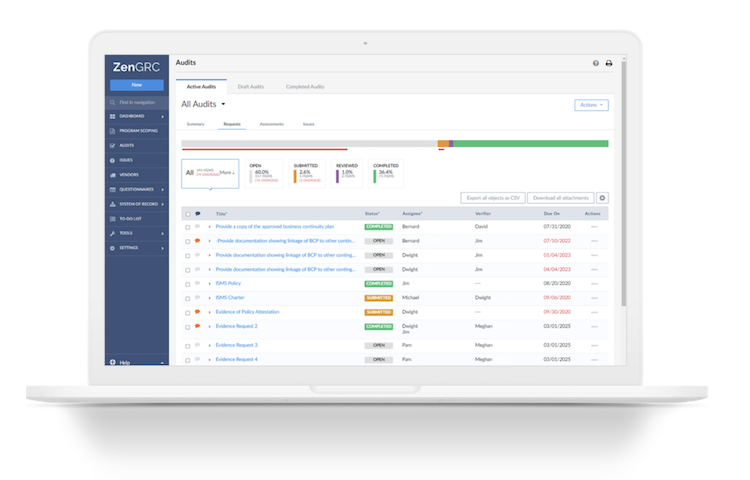
What sets ZenGRC apart in the automated audit solutions vs. traditional compliance methods debate is our commitment to accessibility and simplicity. We offer all critical features at a single, predictable price with no hidden costs. Our AI-powered assistant, GRACI, provides analyst-level support to accelerate implementation, while our intuitive interface means your team can get up and running quickly. Organizations using ZenGRC report dramatic reductions in audit preparation time and improved compliance visibility.
Ready to see how automated audit solutions can transform your compliance program? Schedule a demo today and discover how ZenGRC can help your organization achieve compliance excellence.