
OneTrust vs Optro (AuditBoard) vs ZenGRC: Which Is Better for Your GRC Needs?
Quick Summary
Choose OneTrust for privacy, data, and AI governance, or Optro for audit-led risk management. With ZenGRC, we help lean teams manage multiple frameworks through shared controls, evidence reuse, and pricing without per-user or per-framework fees.
| Category | OneTrust | Optro (AuditBoard) | ZenGRC |
|---|---|---|---|
| Primary Fit | Teams connecting privacy, data, AI, and technology risk governance. | Audit-led programs connecting fieldwork with enterprise risk. | We support lean teams managing growing multi-framework compliance programs. |
| Audit & Risk | Risk assessments, quantitative calculations, remediation workflows, and exposure dashboards. | Audit planning, staffing, fieldwork, and risk scenario modeling. | We connect assessments, controls, evidence, findings, and follow-up work. |
| Multi-Framework | Shared evidence mapped across 50+ standards, regulations, and frameworks. | Preloaded and custom frameworks mapped to common controls. | We map shared controls and reuse evidence where assessment requirements overlap. |
| AI Features | Automated risk analysis and oversight of business AI systems. | Control mapping, testing, sampling, and generated audit documentation. | Our AI evaluates documented controls, with reviewer approval. |
| Integrations | ServiceNow connections for privacy requests, discovery, and asset inventories. | Jira, ServiceNow, and Azure DevOps connections support operational workflows. | We connect compliance tools and support MyCSF evidence transfer. |
| Ease of Use | Reviewers praise workflows but note complex setup. | Reviewers praise navigation but note documentation-retrieval difficulties. | We keep control ownership, evidence, and assessment work connected. |
| Implementation | Tiered support. Premier and Signature include dedicated CSM engagement. | Implementation services and training. Premium Support adds dedicated resourcing. | We provide a designated CSM, with guided implementation available separately. |
| Pricing | Custom solution packages based on admin users and relevant inventory. | Custom plans with unlimited stakeholder licenses. | Custom, flat-rate pricing without per-user or per-framework fees. |
OneTrust vs Optro (AuditBoard): How They Compare
AuditBoard now operates as Optro, so we use its current name below. Both platforms cover risk and compliance, with different strengths in how they organize the work.
The following five areas compare their documented capabilities, service models, and reported user experiences.
Audit Management, Risk Assessment, and Reporting
OneTrust connects technology risks with assets, processes, and vendors. Assessments combine qualitative ratings with quantitative calculations, while dashboards show key risk indicators and potential exposure. This gives risk owners context for judging how a weakness affects the business.
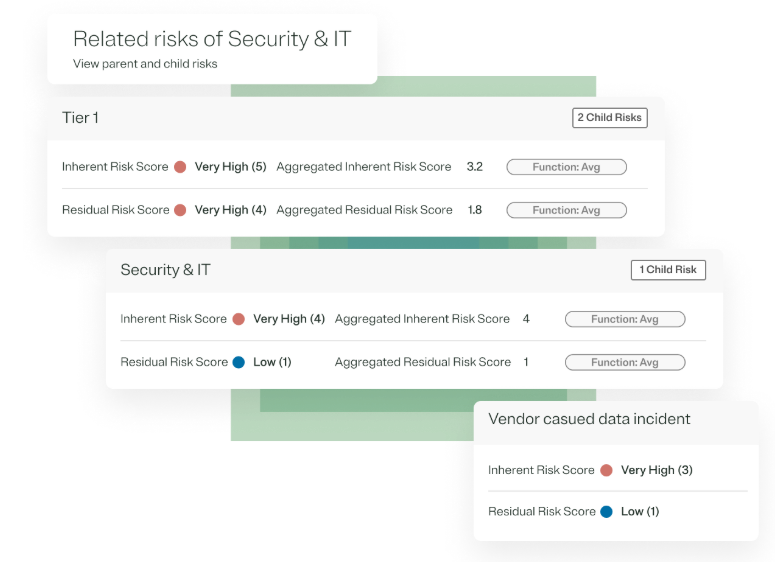
OneTrust Risk Management UI
Its broader platform connects privacy, data, third-party, technology, and AI governance. For example, a supplier handling customer information may need input from several governance teams. Shared information helps those teams assess related concerns without treating the supplier as an unrelated record in each program.
Optro documents audit execution features for planning, staffing, fieldwork, and reporting. OpsAudit connects risk-based planning, staffing, evidence requests, fieldwork, and reporting. Reusable work programs reduce repeated setup, while staffing recommendations match team skills with audit assignments. This is particularly relevant when audit managers coordinate several projects and competing resource needs.
Its risk management offering also supports bowtie analysis, Monte Carlo modeling, and response plans. These tools help risk leaders compare possible events and mitigation choices. OneTrust’s documented emphasis is connected technology risk context, where Optro combines audit delivery with dedicated enterprise risk analysis.
Multi-Framework Compliance, Control Mapping and Evidence Reuse
OneTrust provides controls, evidence tasks, templates, and guidance across more than 50 standards, regulations, and frameworks. Its shared-evidence model maps operational evidence to control requirements. External connections support evidence collection, reducing the need to request the same records repeatedly.
Optro lists more than 30 preloaded frameworks, standards, and regulations. Teams can add custom frameworks and map them to common controls. Its published model emphasizes shared control records that support requirements across several programs.
These approaches both support reuse. OneTrust explains the evidence-to-requirement relationship in more detail, while Optro emphasizes common-control mapping. The published framework counts do not establish which platform better covers a specific organization. Framework versions, custom requirements, and testing scope also affect coverage. A smaller library can still cover the full set of obligations relevant to a particular compliance program.
For example, a change-management record may support both SOC 2 and ISO 27001 work. Its usefulness depends on the systems covered, the review period, and the test performed. A mapped record still needs assessment. Neither a larger library nor an existing control link proves that evidence meets the next auditor’s requirements.
Integrations, AI Features and Workflow Automation
OneTrust’s ServiceNow integration supports privacy requests, data discovery, and asset inventories. Optro documents Jira, ServiceNow, and Azure DevOps connections for ticket creation and incident tracking. The shared ServiceNow listing therefore covers different documented workflows, which matters more than counting integration logos. (Sources: OneTrust, ServiceNow Integration | Optro, Integrations)
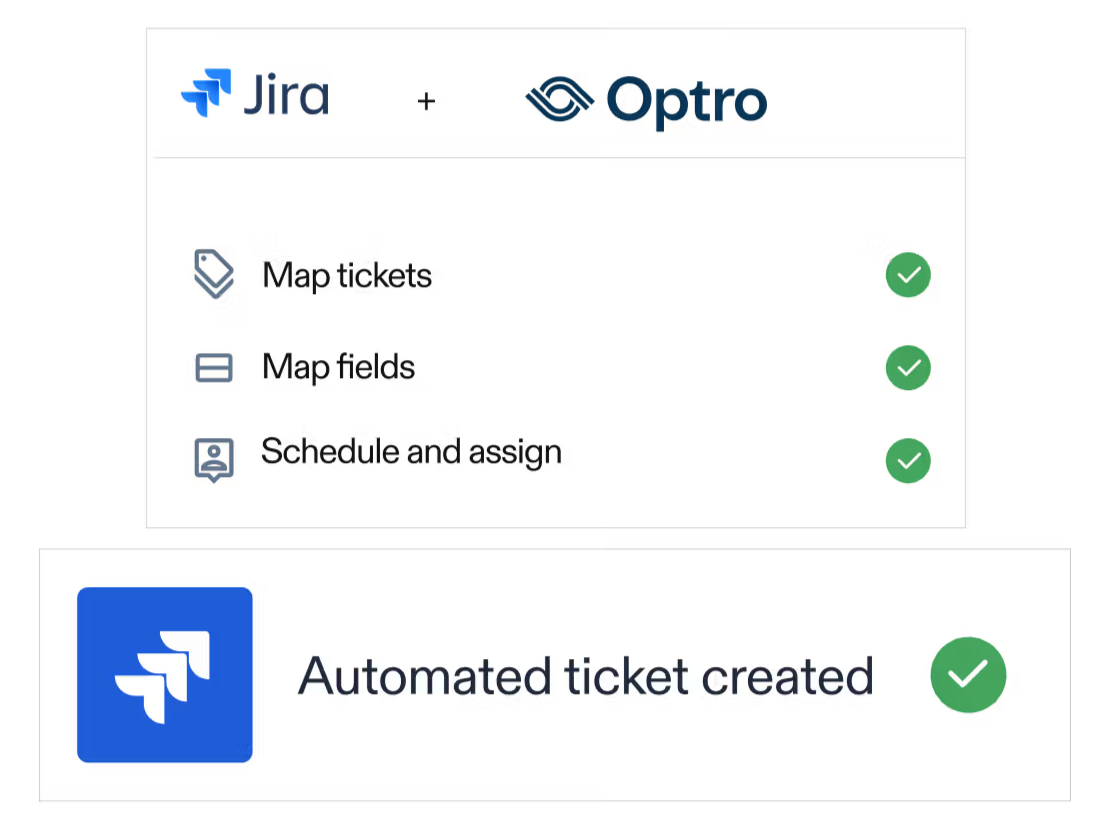
Optro’s Integration with Jira
OneTrust combines automated risk analysis with governance of AI systems. Its AI Governance package includes inventories, approval gates, monitoring, and controls over prompts, outputs, and permitted actions. This is relevant when compliance work includes overseeing how the business deploys AI.
Optro applies AI to control mapping, testing, and sampling, and generates audit narratives, flowcharts, and evidence-supported workpapers. Its October 2026 announcement describes automated evidence collection for Autonomous Testing as an upcoming enhancement. Outputs remain subject to human review and approval.
The distinction is the work receiving support. OneTrust’s documented offering connects AI oversight with wider governance decisions. Optro gives audit teams specific assistance with fieldwork and testing. These are areas of emphasis, rather than proof that either platform lacks broader automation.
Ease of Use, Implementation Time and Support
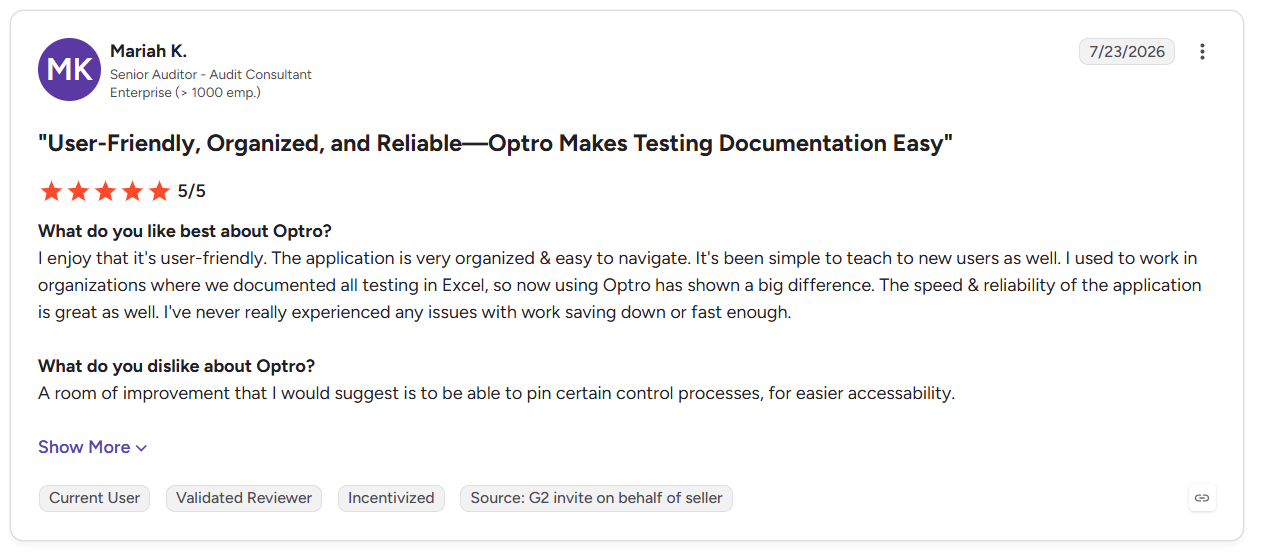
A February 2026 OneTrust reviewer in education management praised easy-to-use workflows and clear dashboards. However, they found some configuration and initial setup complex and time-consuming. Their experience suggests that daily usability and setup effort can differ within the same deployment.
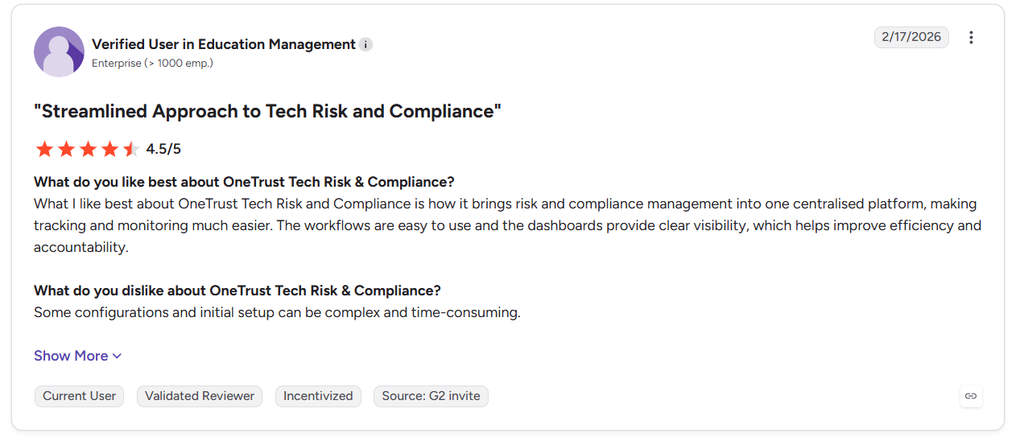
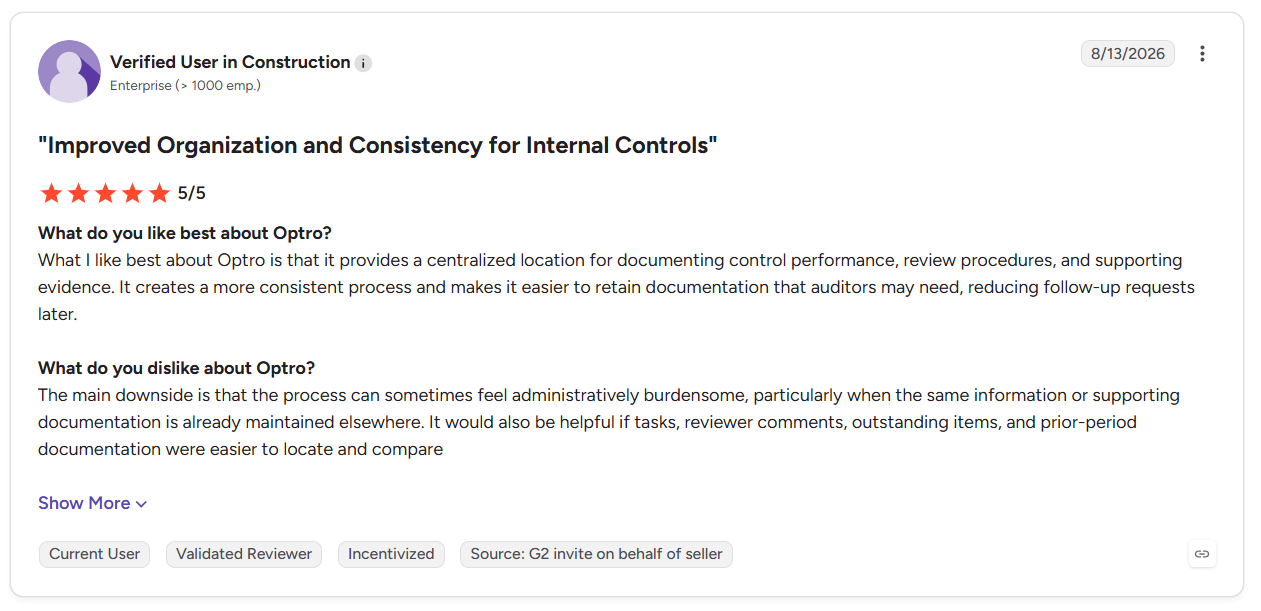
Optro reviewer Mariah K., a senior auditor, praised navigation and training new users in July 2026. An August 2026 construction-sector reviewer valued centralized documentation but wanted easier access to reviewer comments and prior-period records. These reviews suggest that navigation can work well, while finding older records and comments may take more effort.
G2 reports average implementation times of two months for OneTrust Tech Risk & Compliance and four months for Optro. These figures reflect different customer deployments and product scopes. They do not establish which platform would deploy faster for equivalent requirements.
OneTrust offers tiered success packages, with dedicated Customer Success Manager engagement in Premier and Signature. Optro provides implementation services, training, and technical support, with dedicated resourcing through Premium Support. Both offer structured assistance, although the selected service package determines the level of ongoing help.
Pricing Models and Total Cost of Ownership
OneTrust uses Custom solution packages. Tech Risk & Compliance pricing depends on admin users and asset inventory. AI Governance and third-party management use their respective inventories alongside admin users. Expansion costs therefore depend on the solution and the records being managed. (Source: OneTrust, Pricing and Packaging)
Optro also uses Custom pricing, with flexible plans and unlimited stakeholder licenses. Its pricing page does not establish identical terms for auditors, administrators, and other roles. The stakeholder allowance supports broad participation, but cannot be treated as unlimited access across all user categories. (Source: Optro, Pricing)
Neither model establishes a cheaper option without comparable quotes. Implementation, training, integrations, and support affect total cost alongside the subscription. OneTrust’s success tiers and Optro’s Premium Support show why service scope matters. A lower subscription quote offers limited insight if it excludes assistance another quote includes. (Sources: OneTrust, Support and Services | Optro, Success and Services)
ZenGRC as an Alternative to OneTrust and Optro
When several frameworks depend on the same small team, keeping compliance work connected becomes a priority. With ZenGRC, we bring controls, evidence, assessments, and findings together so your team can build on completed work.
The following four strengths explain how we support growing compliance programs.
Connect Controls and Evidence Across Multiple Frameworks
Separate framework records can hide work your team has already completed. We map shared controls to relevant requirements and connect the evidence supporting them. This gives reviewers a common starting point when another assessment arrives.
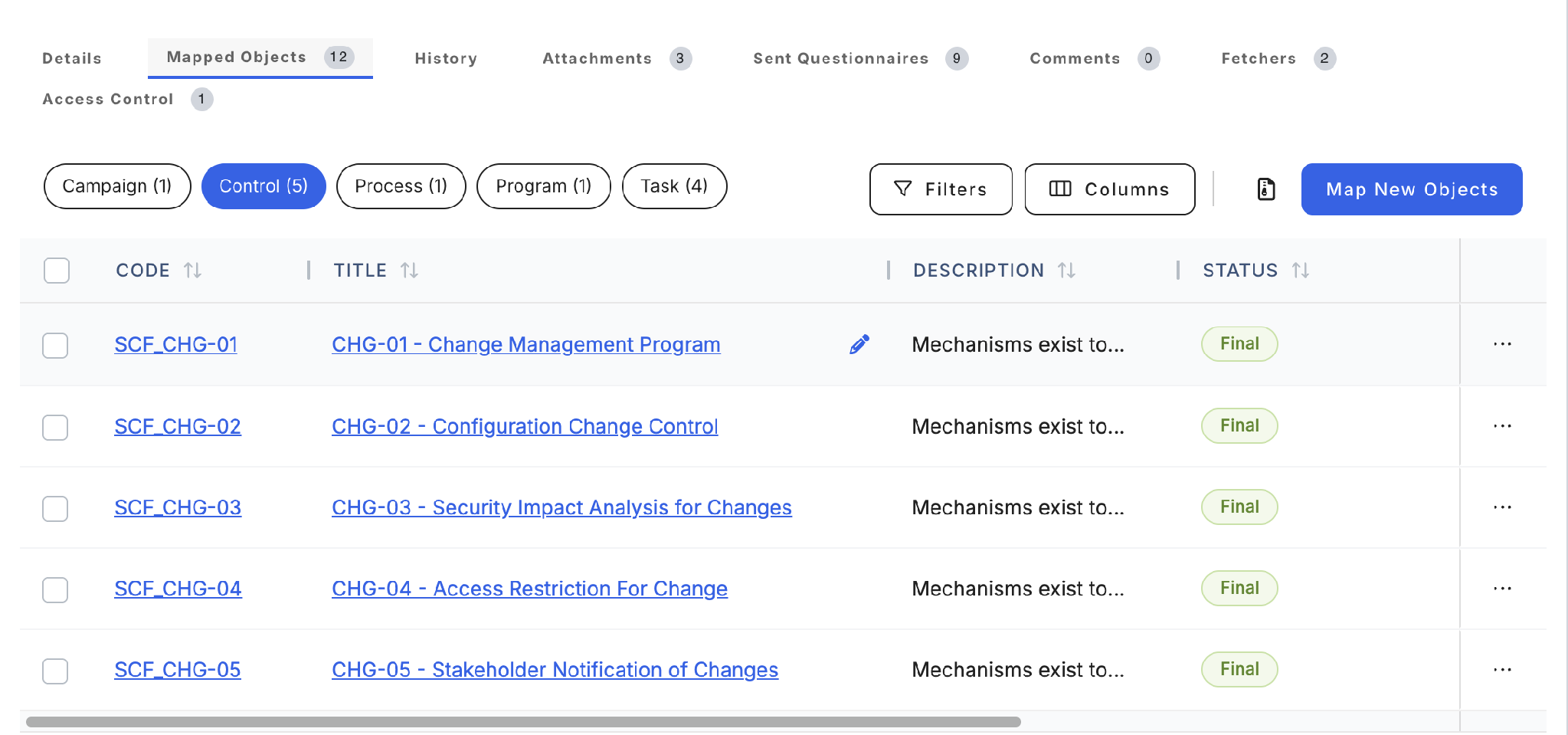
How to cross-map records to each other in ZenGRC
Consider a healthcare software company adding HITRUST alongside HIPAA. An existing access review may support overlapping requirements, provided its scope, review period, and testing evidence meet both standards. The team can map the control once, verify what is missing, and collect only the gap.
OneTrust and Optro also support reuse. Our value is bringing this work into the compliance team’s ongoing control and assessment process. We help teams build on existing records as requirements grow.
Support HITRUST Preparation Through Our MyCSF Integration
Assessment preparation creates another handoff when evidence must move into MyCSF. Our native integration supports evidence and control-response transfer between our platform and HITRUST’s assessment system. Teams can connect ongoing compliance work with the records needed for assessment.
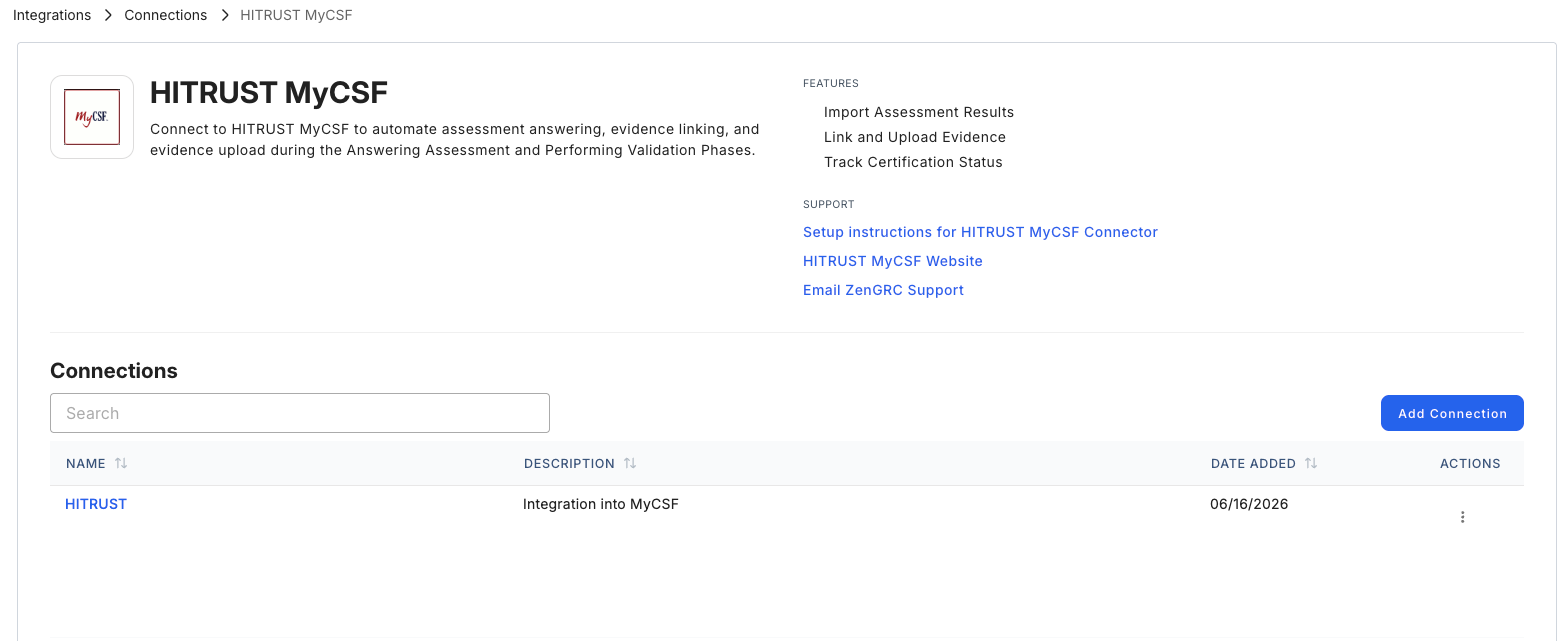
MyCSF Integration in ZenGRC
The practical benefit concerns submission work. A team preparing evidence internally can carry that work into the assessment process with less manual re-entry. Compliance management and assessment submission remain connected, even when different people handle them.
This makes the integration particularly relevant when assessment preparation creates a recurring handoff between internal reviewers and outside assessors.
We support preparation and evidence management alongside MyCSF. Required licenses, the authorized assessor’s work, and HITRUST’s certification decision remain separate. The integration does not guarantee certification.
Get Guided Implementation and Ongoing Compliance Support
Moving records into a platform only helps when the resulting workflows fit the team’s responsibilities. Our onboarding process covers framework scoping, data setup, administrator training, and workflow reviews. It also validates automation, access, and reporting before completion.
For a team replacing spreadsheets, these steps help establish who owns the work and how progress will be reported. Training uses the program’s priorities as a starting point, giving contributors a clearer route into their responsibilities.
Guided implementation is available through a separate onboarding package. We also provide a designated Customer Success Manager for the ongoing relationship. Keeping implementation and support distinct makes their purpose clear, which is setting up the program and helping the team continue using it.
Add Users and Frameworks Without Per-User or Per-Framework Fees
We use Custom, flat-rate pricing without per-user or per-framework fees. Adding contributors or frameworks does not introduce those specific charges. This supports involving control owners across departments as responsibilities expand.
Quotes still depend on program scope and commercial terms. Our Trust Center and Business Intelligence Portal are separately priced options unless included in the agreed package. The advantage is a clear basis for planning participation and framework growth, rather than a promise of identical costs for different programs.
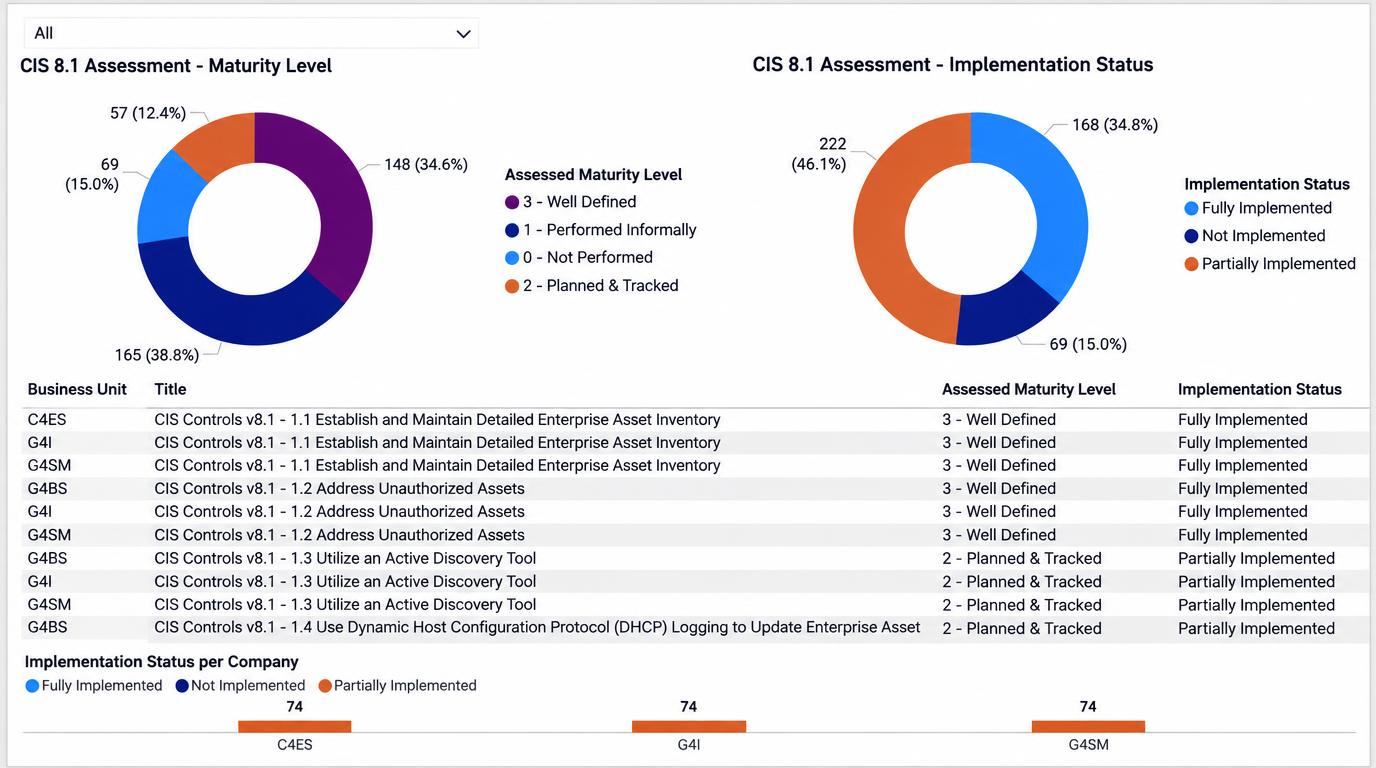
ZenGRC Business Intelligence Portal
How to Choose the Right GRC Software for Your Team
The strongest fit depends on the work driving the purchase and the people responsible for it. Each option has a clearer case when matched to a specific operating need.
Choose OneTrust for Connected Privacy, Data and AI Governance
OneTrust is a strong fit when the purchase serves several governance functions. A business introducing AI into customer services may need privacy reviews, data oversight, and technology risk decisions connected. Its platform brings these areas into shared governance workflows.
The case is strongest when coordinating decisions across privacy, security, and AI owners is central to the project. Its wider coverage has direct value when those teams depend on the same business context.
Choose Optro for Audit-Led Risk and Compliance Management
Optro fits organizations where the internal audit function drives the purchase. Its planning, staffing, and fieldwork capabilities support managers coordinating audits across teams and business units. The platform’s audit focus is especially relevant when coverage and delivery are management priorities.
A company coordinating several audit engagements has a clear reason to consider this approach. Risk analysis adds value when findings need to inform broader decisions about exposure and mitigation.
Choose ZenGRC for Growing Multi-Framework Compliance Programs
We are a strong choice when compliance responsibilities are growing faster than team capacity. New customer requirements, recurring evidence requests, or staff changes can expose the limits of scattered records. Our platform connects the work so the team can maintain oversight as its program expands.
For these buyers, continuity matters. Another person should be able to find the records and understand what remains unfinished. Our approach supports a program that can build on prior work through successive assessments.
Bazaarvoice illustrates this need. Its team replaced spreadsheets and documents with ZenGRC for ISO 27001 and vendor management. Our published case study describes faster audit-history retrieval, simpler vendor-data migration, and better leadership reporting while preserving its customized GRC practices.

Manage Growing Compliance Demands With ZenGRC
More frameworks can mean repeated evidence requests and more work for the same team. Your GRC platform should help you keep pace.
With ZenGRC, we connect controls, evidence, and assessments so your team can reuse relevant work and track responsibilities. Our flat-rate pricing has no per-user or per-framework fees.
Book a demo to see how we can support your compliance program.