
Vanta Review & ZenGRC As A Better Fit
Summary
Vanta is a popular choice for startups tackling their first SOC 2. Its automation and integrations can simplify compliance early on. As programs become more complex, however costs, limited customization, and gaps in automation can become harder to ignore. ZenGRC is a unified, full-featured GRC built for organizations that need more than a first certification.
Vanta Pros and Cons
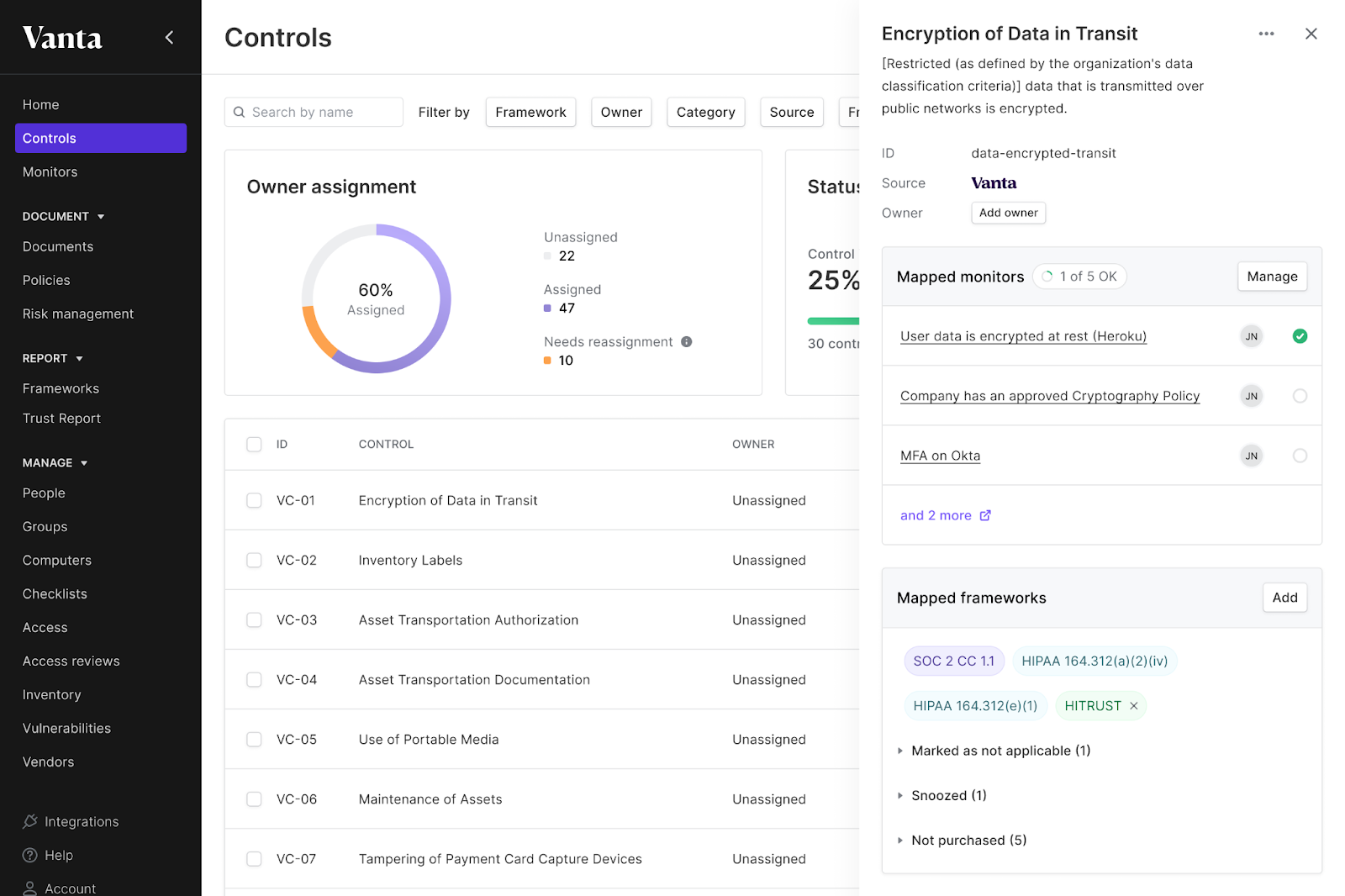
Vanta is a popular GRC platform that helps teams manage SOC 2, ISO 27001, and other frameworks. It’s known for its automated evidence collection and integrations which makes compliance easier to get started with.
But getting started and scaling a GRC program are two different things. Here’s a look at what actual customers like and dislike about Vanta.
Vanta Pros
1. Automated Evidence Collection
Automation is one of the main reasons companies choose Vanta. The platform connects with the systems teams already use and collects compliance evidence in the background.
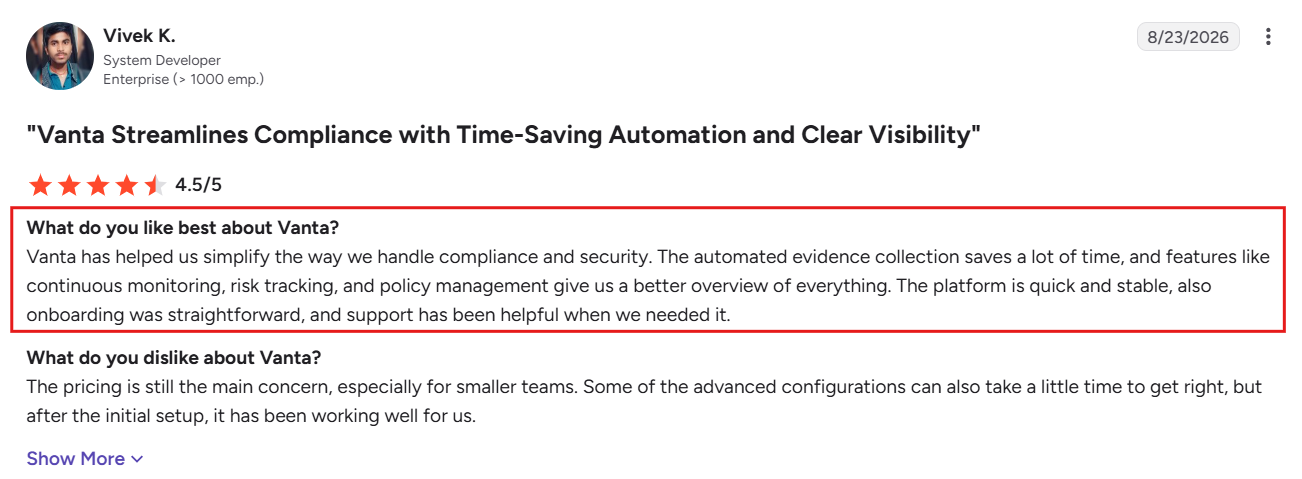
Users say this helps centralize compliance tasks, keep evidence updated, and reduce the manual work involved in audit preparation. For smaller teams without dedicated compliance resources, that automation can make a real difference.
2. Strong Integrations
Several reviewers specifically mention being able to connect the platform with the rest of their technology stack. Those connections make it easier to monitor controls and collect evidence without manually pulling information from every system.
3. Easy-to-Use Interface
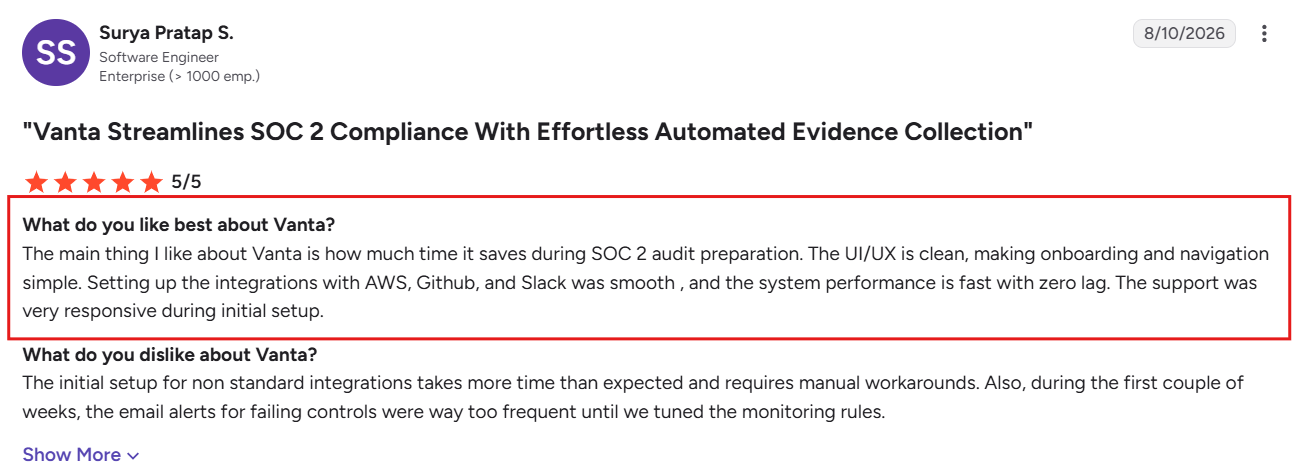
Most customer feedback suggests Vanta is relatively easy to navigate. Reviewers often mention the dashboard, visual compliance tracking, and the ability to quickly see what needs attention.
Continuous monitoring is another key strength. Rather than waiting until audit season to find compliance gaps, teams can see when controls fall out of compliance and address issues as they arise. This level of visibility is especially useful for companies moving away from spreadsheets and periodic compliance checks.
Vanta Cons
1. Costs Add Up as Compliance Needs Grow
Vanta works well for a company starting with one framework. But once you need to add another framework, more users, more vendors, or more GRC requirements, it becomes quite steep.
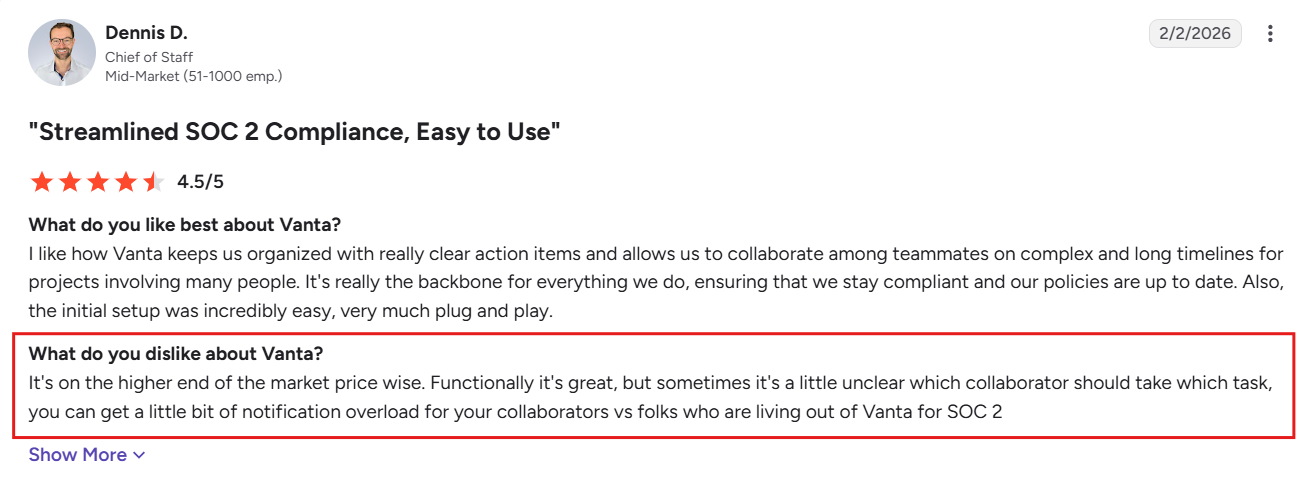
Several reviews note the price jumps that occur once organizations expand their compliance programs. Advanced features are also tied to higher tiers, forcing teams to upgrade if they want to access them.
2. Limited AI Features
Some reviewers find the Vanta’s AI features useful for reviewing evidence, analyzing policies, and helping with compliance work. But most note that the technology still feels early, and what you can actually do with it is quite limited.
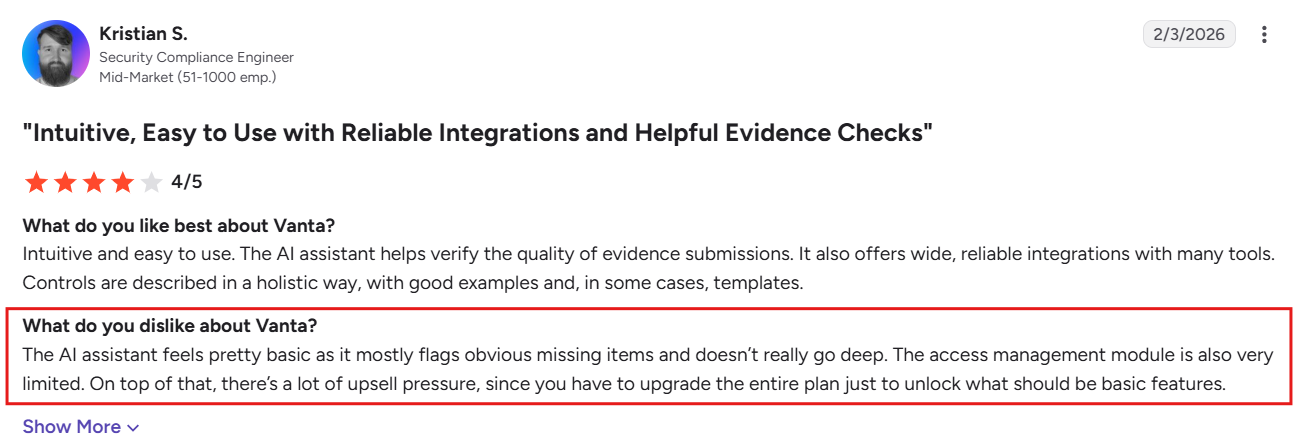
The AI output is also not useful enough to trust without substantial rewriting. It also has issues with completely following instructions, making it helpful only in certain workflows.
3. Noisy Notifications
Vanta generates too many notifications whether or not they matter, according to several G2 reviews. This makes the continuous monitoring feature counterintuitive.
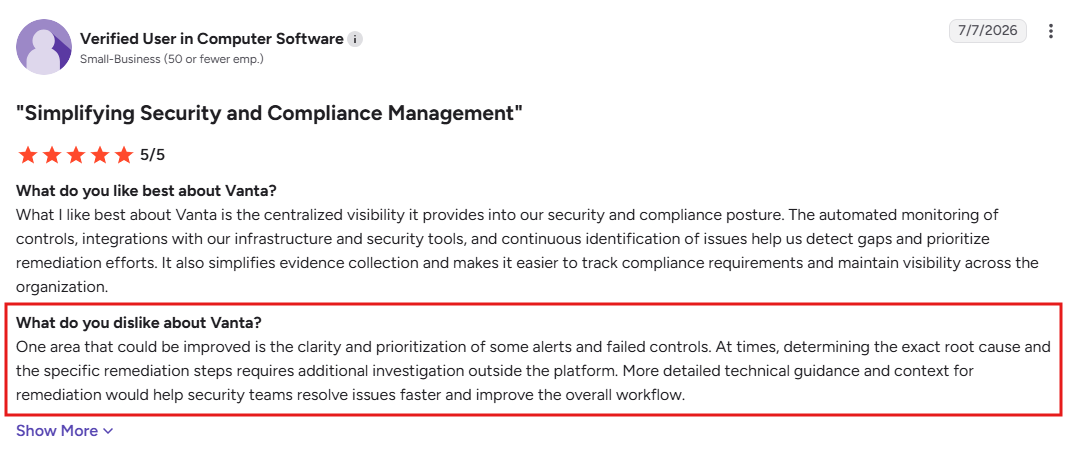
Users report having to spend sorting through alerts that don’t require immediate attention, taking time away from work that actually needs to get done.
4. Inflexible Workflows
Vanta’s overall interface receives positive feedback, but some areas of the platform are more frustrating than others.
Reviewers have mentioned issues with search, table layouts, framework navigation, policy management, and customization. The UI can also feel cluttered and moving between different compliance frameworks was not always intuitive.
One reviewer found Vanta’s notification options too limited, particularly when it came to customizing automated reminders and giving users enough context. These limitations may not matter much for a straightforward SOC 2 program. But they become more noticeable as compliance environments become more complex.
5. Integration Issues
Vanta’s integrations don’t always eliminate manual work. Reviewers have reported slow syncing, limited data pulled from connected tools, and problems recognizing deactivated assets. As a result, they have to resort to manually exporting data, uploading files, or checking information.
Why ZenGRC is a Better Alternative
Vanta is a strong option for companies getting through an initial compliance program. Its automation, integrations, and straightforward approach can make a first SOC 2 feel much more manageable.
But compliance usually doesn’t stop there. You may add another framework, bring more teams into the process, or start managing risks and controls alongside compliance. At that point, you need a platform that can handle more than one audit at a time.
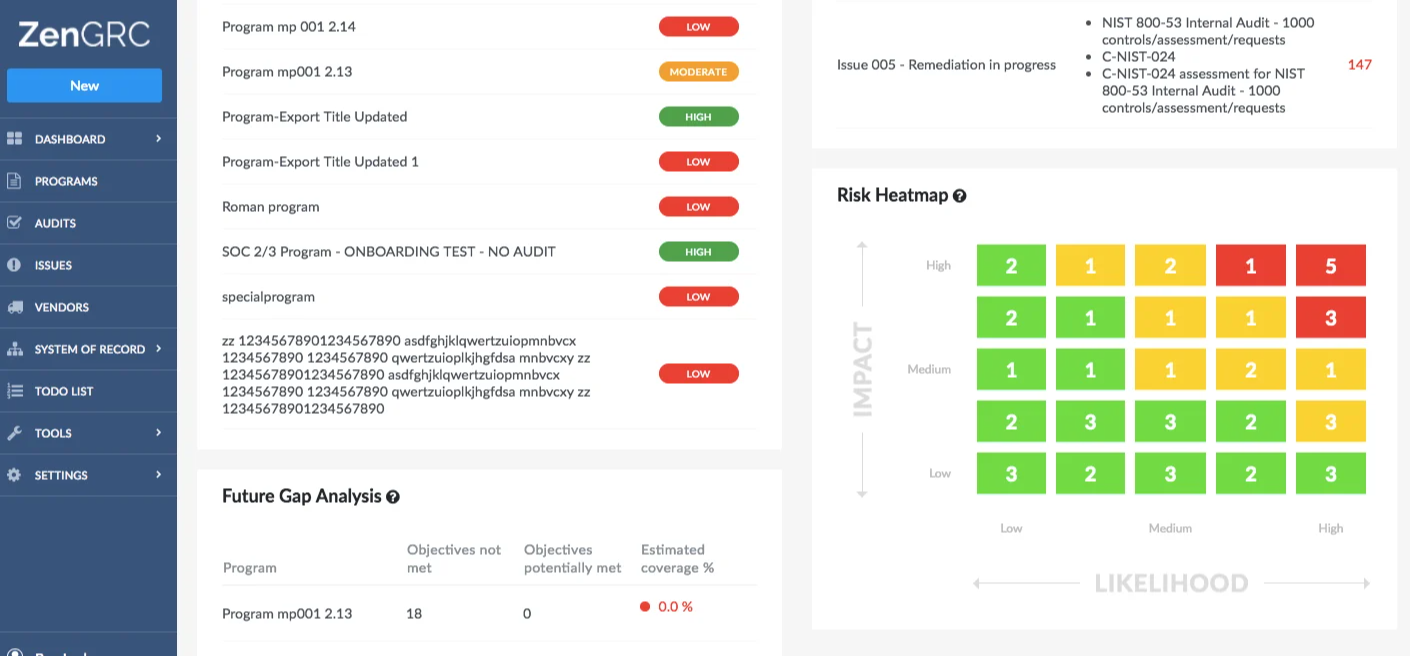
That’s where ZenGRC fits in. Our platform consolidates compliance, risk, controls, policies, evidence, and audits into one platform, so you can manage the wider GRC program as it grows.
Here’s how it stands apart:
1. Built to scale across multiple frameworks
Vanta can be a good fit when you’re focused on getting through your first major framework. But most companies don’t stay with one.
You might start with SOC 2 and later add ISO 27001, HIPAA, PCI DSS, NIST, or other requirements. Once that happens, you need to see where those frameworks overlap so you’re not doing the same work twice.
ZenGRC is built for multi-framework programs. You can map overlapping requirements and reuse controls and evidence across frameworks, rather than managing each one as a separate project.
2. More flexibility for different evidence types
Automation is valuable, but not every piece of evidence comes from an API connection. Compliance programs usually involve screenshots, documents, policies, reports, manually collected evidence, and information from systems that may not integrate directly with a GRC tool.
ZenGRC supports these different evidence types alongside automated collection. So you can automate what you can without having to force every part of your evidence process into an integration. That matters as your program grows. Automation can save you time, but it doesn’t eliminate the evidence that still needs to be collected manually.
3. More predictable pricing as your program grows
A GRC platform should support growth without forcing organizations to constantly reassess how much the next framework, feature, or expansion will cost.
ZenGRC uses a pricing model designed to stay predictable as you add frameworks, users, and vendors. That makes it easier to plan your GRC budget without constantly working out what the next stage of your program will cost.
Instead of buying for where the company is today and worrying about what the platform will cost tomorrow, organizations can choose a solution built for the broader program they expect to manage.
4. Better control mapping
As compliance programs become more complex, understanding the relationship between policies, controls, risks, and frameworks becomes more important.
ZenGRC supports bidirectional mapping between policies and controls. Teams can connect policies to the controls they support and trace controls back to the policies behind them.
That creates better visibility across the compliance program and makes it easier to understand how different requirements connect. For organizations managing multiple frameworks, that level of mapping can reduce confusion and help teams identify gaps before they become audit problems.
5. Stronger support for auditor collaboration
Audits involve more than collecting evidence. You also need to respond to auditor requests, share documents, and keep track of what has been provided.
ZenGRC supports auditor collaboration through controlled access and PBC automation. This gives auditors the information they need without making your team manage every request through email and separate file-sharing tools.
It keeps the audit work in the same place as the rest of your GRC program, so you have a clearer record of what was requested, what was provided, and what still needs attention.
Want to Take Your Compliance Program to the Next Level?
The biggest difference between Vanta and ZenGRC is not simply a list of features. It’s the type of program each platform is designed to support.
Vanta can be a good starting point for startups that need to automate their way through an early compliance requirement.
ZenGRC is built for what comes next. If you are managing multiple frameworks, different types of evidence, broader risk programs, and ongoing audits need more than a tool that helps them check compliance boxes.
Book a demo and see how ZenGRC can support your GRC program as it grows.
FAQs
1. Is Vanta worth the cost for a small startup?
It depends on your compliance needs.
Vanta can be a good option for startups working toward their first SOC 2 or similar certification. Its automation and integrations can save small teams significant time.
However, customer reviews suggest costs can become a bigger consideration as companies add frameworks or additional features. Teams should consider not only what they need today but also what their compliance program may look like in the future.
2. Does Vanta replace the need for a GRC expert?
No. Vanta can automate evidence collection, monitoring, and other compliance tasks. But it does not replace the need for human expertise. Someone still needs to interpret controls, assess risk, tailor policies, manage exceptions, and work with auditors.
3. What frameworks does Vanta support?
Vanta supports several common compliance and security frameworks, including SOC 2, ISO 27001, HIPAA, PCI DSS, GDPR, NIST, and others. However, the level of automation and evidence collection available can vary depending on the framework and an organization’s technology environment.
4. How is ZenGRC different from Vanta?
Vanta is particularly popular for helping companies automate early compliance programs. ZenGRC, on the other hand, is designed for broader and more complex GRC needs. Our tool supports multi-framework compliance, risk management, evidence management, control and policy mapping, audits, and auditor collaboration in one connected platform.
That makes ZenGRC a stronger fit for organizations looking beyond a single certification and planning for a growing GRC program.