
10 Scrut Automation Alternatives We Reviewed for Multi-Framework Compliance
Quick Summary
Scrut Automation is an AI-powered compliance automation platform that supports dozens of frameworks. If you’re comparing alternatives, the right fit depends on the frameworks you run, how your team works, and how pricing changes as your program grows. Here’s a quick look at the first three platforms on our list:
| # | Tool | Best For |
|---|---|---|
| 1 | ZenGRC | Mid-market teams running multiple frameworks with flat-rate pricing |
| 2 | Strike Graph | Teams designing a custom security program, including CMMC |
| 3 | Drata | Teams automating compliance with AI agents |
What Multi-Framework Teams Need in a GRC Platform.
Once your program spans several frameworks, you need more from a GRC platform than evidence collection. You need to manage overlapping requirements, reuse evidence across frameworks, keep controls current, and see your compliance posture across the business.
That matters most for mid-market teams in regulated industries running SOC 2 alongside HIPAA, HITRUST, or CMMC.
Scrut Automation is one option. We reviewed 10 alternatives with multi-framework compliance in mind, covering what each does well and which teams it fits best.
Why listen to us?
ZenGRC offers robust, intuitive products that help organizations like Beeline and Datti turn compliance and risk management into a business advantage. We understand the complexities of building and managing compliance programs, and assess the alternatives in this article based on what we know works, where platforms fall short, and what matters as your needs grow.
10 Best Scrut Automation Alternatives
Here are the top ten Scrut Automation alternatives for compliance teams in 2026:
| # | Tool | Best for | Starting price | G2 rating |
| 1 | ZenGRC | Multi-framework mid-market teams | Not published (flat-rate, all modules) | 4.4/5 |
| 2 | Strike Graph | Teams designing a custom security program, including CMMC | Starts at $21,500/year | 4.7/5 (195 reviews) |
| 3 | Drata | Teams automating compliance with AI agents | Not published | 4.7/5 (1,331 reviews) |
| 4 | Sprinto | Teams growing from a first audit to a full GRC program | Not published (tiered plans or modular packages) | 4.78/5 (1,6854 reviews) |
| 5 | Secureframe | Teams pairing compliance automation with security training | Starts at ~$7,500/yr | 4.7/5 (826 reviews) |
| 6 | Hyperproof | Teams standardizing one control set across multiple framework | Not published | 4.5/5 (222 reviews) |
| 7 | Optro (formerly AuditBoard) | Enterprises connecting internal audit, risk, and compliance in one platform | Not published | 4.6/5 (1,625 reviews) |
| 8 | Scytale | Teams wanting compliance software backed by in-house experts | Not published (bundles or custom-built plans) | 4.7/5 (765 reviews) |
| 9 | LogicGate Risk Cloud | Enterprises configuring GRC applications without code | Not published | 4.6/5 (191 reviews) |
| 10 | OneTrust | Enterprises managing privacy, AI governance, and GRC in one suite | Not published | 4.3/5 (400+ reviews) |
1. ZenGRC
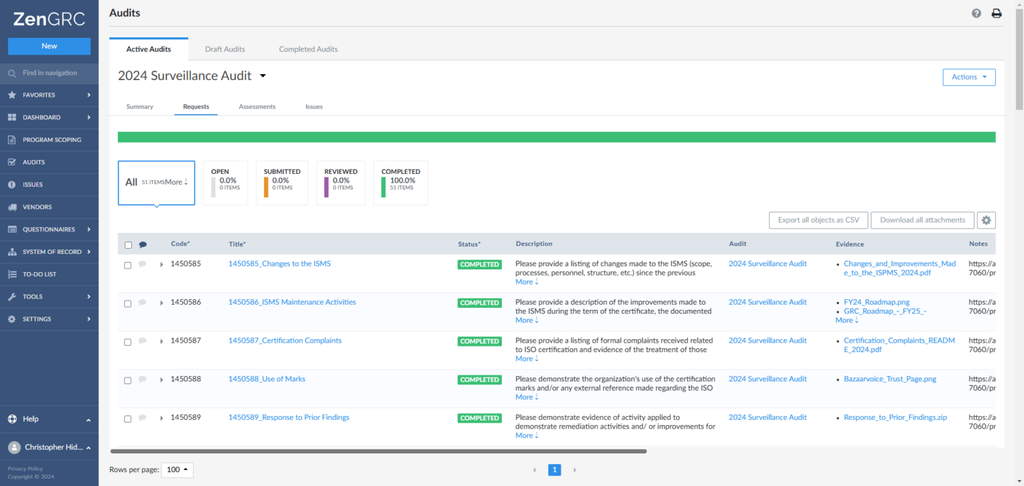
ZenGRC is a governance, risk, and compliance platform for mid-market teams managing multiple frameworks. The platform is built around a simple idea: you shouldn’t have to collect the same evidence twice just because two frameworks ask for it.
Teams can reuse controls and evidence across frameworks such as SOC 2, HITRUST, and HIPAA. For example, an access-control test completed for SOC 2 can also support relevant requirements in other frameworks. This reduces duplicate compliance work as teams add certifications and expand their compliance programs.
Every customer runs on a dedicated, isolated instance. Your contract includes a written guarantee that your data never trains an AI model. If you’re in healthcare or financial services, your legal team will notice that.
Our AI layer runs on AWS Bedrock. It handles the repetitive parts of compliance, like scoping a new program, mapping controls, pulling evidence, and flagging gaps. So your team spends time on judgment calls, not data entry. And because we’ve integrated directly with HITRUST’s MyCSF API, your entire HITRUST certification workflow stays inside ZenGRC.
Bluegreen Vacations saw their audit and compliance workload drop by roughly half after moving to ZenGRC. William Haines, their Director of IT Risk and Compliance, confirmed it firsthand.
Key Features
- Cross-framework control mapping: Test a control once and apply it across every framework that references it.
- AI automation: Scope your program, design controls, collect evidence, and run gap analysis with AI on AWS Bedrock.
- HITRUST MyCSF integration: Run your HITRUST certification inside ZenGRC through the native API connection.
- Single-tenant architecture: Keep your data isolated with a contractual no-LLM-training guarantee.
- Vendor risk management: Track and assess third-party risk with built-in TPRM workflows.
- Auditor collaboration view: Give auditors controlled, read-only access to evidence and controls.
- Board-ready risk reporting: Generate compliance dashboards showing your posture across every framework.
Pricing
The model’s flat-rate includes unlimited users, frameworks, vendors, and all modules. Request a demo for a custom quote.
Rating
G2 Rating: 4.4/5 reviews
Pros
- Cross-framework control mapping eliminates duplicate evidence work as you add frameworks
- Flat-rate pricing means adding a framework or user doesn’t raise your bill
- Teams go live in weeks with a dedicated CSM and expert implementation
- AI-powered GRC automation
- Flexible framework support
- Its automation, dashboards, and data visualisations are easy to use
Cons
- No self-serve free trial or public pricing page.
2. Strike Graph
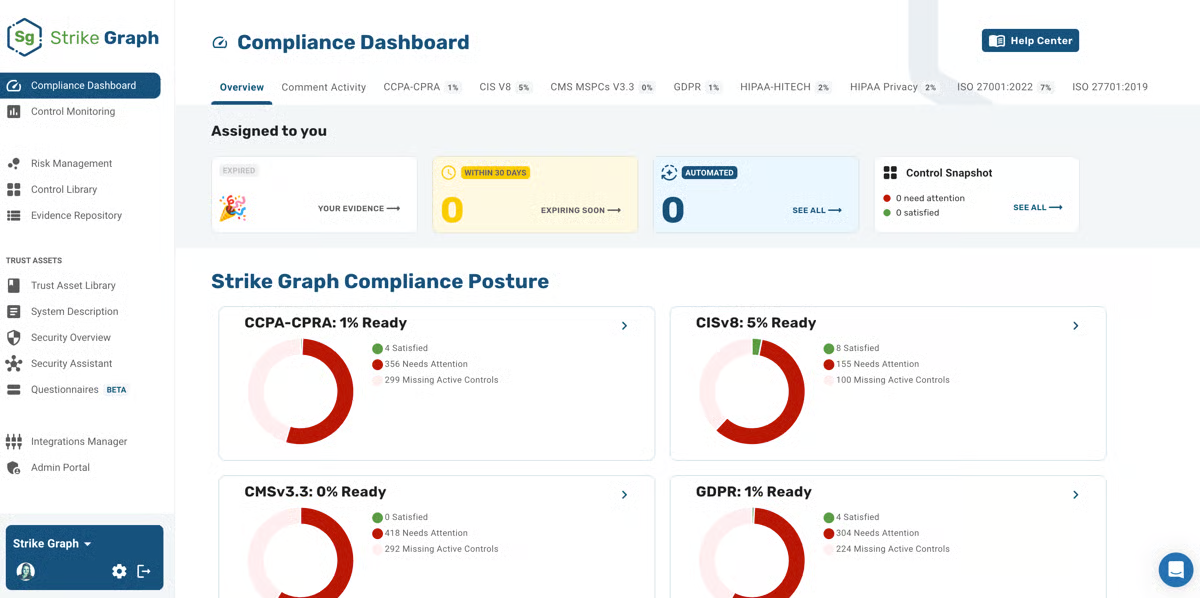
Strike Graph is an AI-native compliance platform built to help teams design a security program around their risk profile and compliance goals.
Key Features
- Verify AI: Reviews and validates evidence as it’s uploaded and flags issues before the audit
- Compliance Atlas: Analyzes compliance posture across controls, evidence, ownership, and audit timelines, then suggests prioritized remediation plans.
- Risk-Based Control Mapping: Assesses risk first, then maps the resulting controls across multiple frameworks at once.
- Security Testing: Offers penetration testing and vulnerability scanning. SBOM monitoring is included in the Scale plan.
Pricing
Strike Graph offers three plans: Certify starts at $21,500 per year; Scale starts at $35,000 per year; Enterprise is quoted.
Rating
G2 Rating: 4.6/5 (196 reviews)
Pros
- Designs your security program around your risk profile
- Strong, responsive customer support, a recurring theme in reviews
- Broad framework support, including CMMC
Cons
- Some G2 reviewers mention an initial learning curve, especially for teams new to compliance frameworks.
- Some G2 reviewers would like more integration options, including for on-premises tools and Terraform
3. Drata
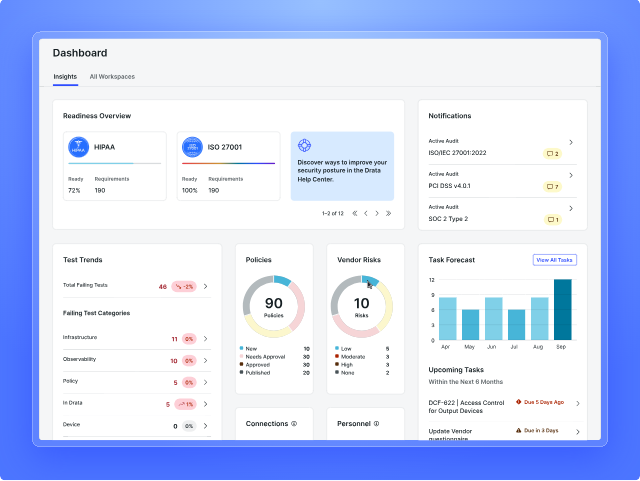
Drata is an automation-first compliance platform that uses AI agents to handle evidence collection, control mapping, and monitoring. It also includes policy and personnel management, built-in security awareness training, and an audit hub for working with auditors.
Key Features
- Automated Evidence Collection: Pull and map evidence from cloud providers and SaaS tools.
- Policy and personnel management: Manage policy workflows and personnel compliance status in one system.
- Security Awareness Training: Run training inside Drata or connect a provider like KnowBe4.
- Audit Hub: Share evidence and track audit progress in a shared workspace.
Pricing
Drata doesn’t publish prices.
Rating
G2 rating: 4.7/5 (1,396 reviews).
Pros
- Automation handles most evidence collection, which cuts manual work
- Built-in security awareness training, with the option to connect an existing provider The audit hub simplifies auditor collaboration
Cons
- Some G2 reviewers say integrations can be limited when a tool they use isn’t on Drata’s supported list
- Some G2 reviewers find the interface overwhelming or slow to navigate at times.
Related: Check our list of the best Drata alternatives.
4. Sprinto
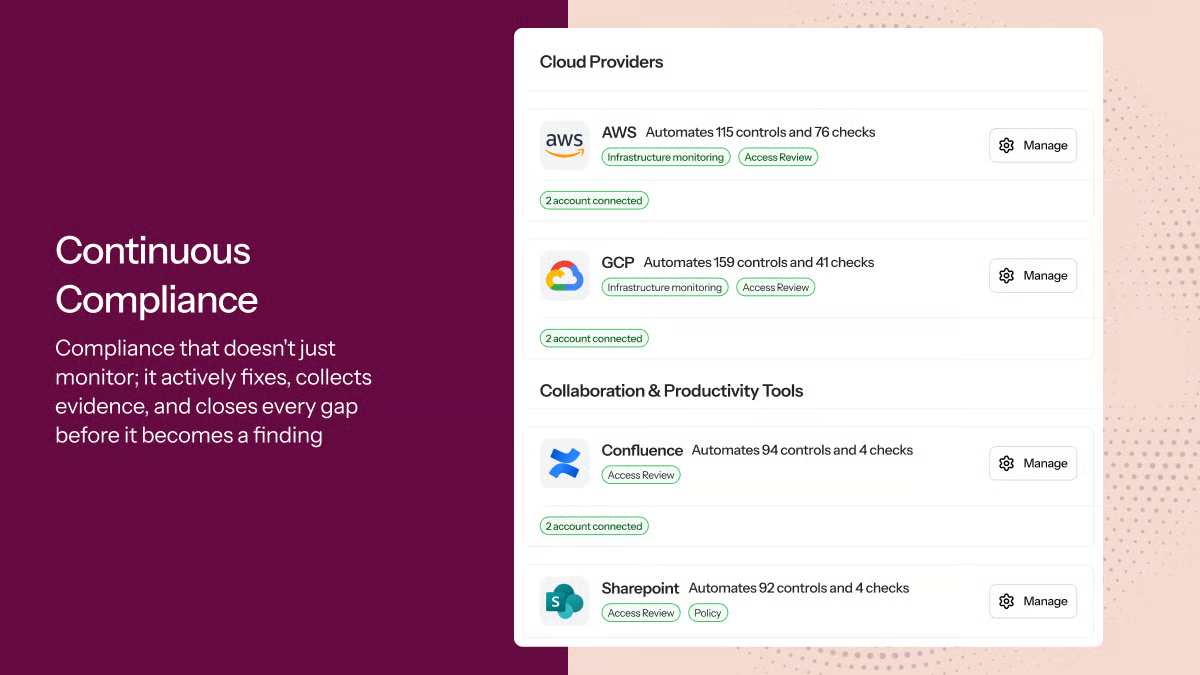
Sprinto is an autonomous trust platform for teams at every stage, from a first audit to a full GRC program. It offers 300+ integrations for continuous monitoring, automates 25+ frameworks out of the box, and auto-maps controls across them.
Key Features
- Continuous monitoring: Checks controls across 300+ integrations and collects evidence automatically.
- Risk management: Run periodic risk assessments with a built-in risk library.
- Multi-entity workspaces: Manage compliance separately for subsidiaries and business units.
- Audit management: Plan audits, then work with an auditor from Sprinto’s network or bring your own.
Pricing
Sprinto doesn’t publish pricing, but it offers two plans for compliance automation (Foundation and Growth) and a build-your-own module package for mature GRC programs. Rating
G2 Rating: 4.8/5 (1,684 reviews)
Pros
- The dedicated success manager helps teams that don’t have compliance expertise in-house
- Fast onboarding process
- Strong automation for evidence collection out of the box
Cons
- Some G2 reviewers would like more flexibility in customization and reporting. y
- Some G2 reviewers say integrations with niche or legacy systems can be limited.
5. Secureframe
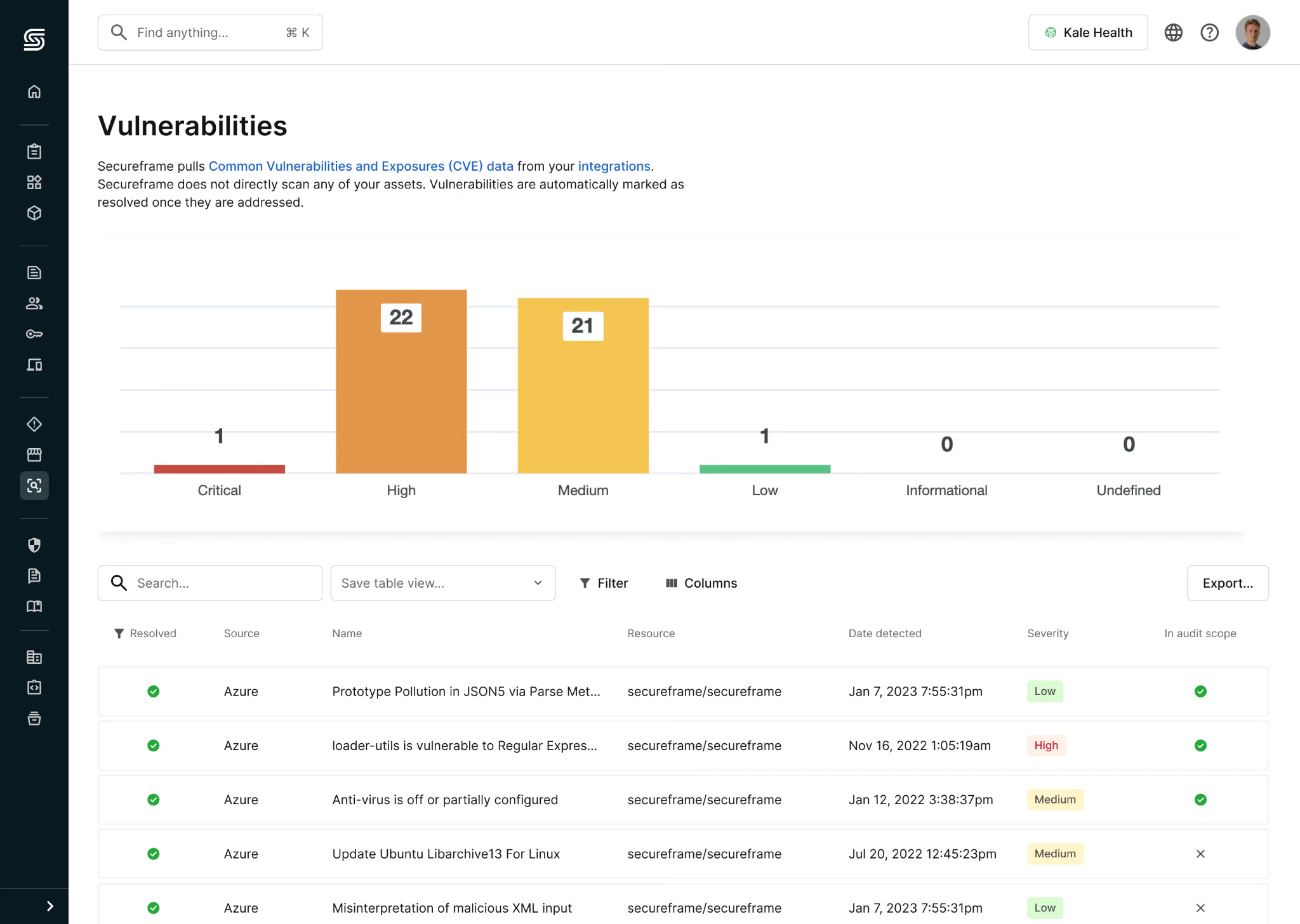
Secureframe automates compliance across frameworks including SOC 2, ISO 27001, HIPAA, PCI DSS, and CMMC. Each framework comes with control mapping and automated control testing. Its personnel management tracks policy acceptance, security training, and background checks in one view.
Key Features
- Personnel Management: Track policy acceptance, security training, and background checks, and send reminders.
- Vendor Risk Management: Assess and monitor third-party risk.
- Continuous Monitoring: Track assets, personnel, and controls continuously.
- CMMC Tools: SPRS score tracking, System Security Plans, and POA&Ms in the Defense package.
Pricing
Secureframe’s Fundamentals package starts at $7,500 per year. Its Complete and Defense packages add advanced risk management and CMMC tools and are priced by quote.
Rating
G2 Rating: 4.7/5 (826 reviews).
Pros
- Personnel tasks like policy acceptance, training, and background checks are tracked in one place
- Broad integration library for automated evidence collection
- AI features for remediation, risk, and security questionnaires
Cons
- Some G2 reviewers find workflows rigid for complex or non-standard environments.
- Some G2 reviewers report integrations that need troubleshooting or occasionally break.
Related: Check our comparison with Secureframe
6. Hyperproof
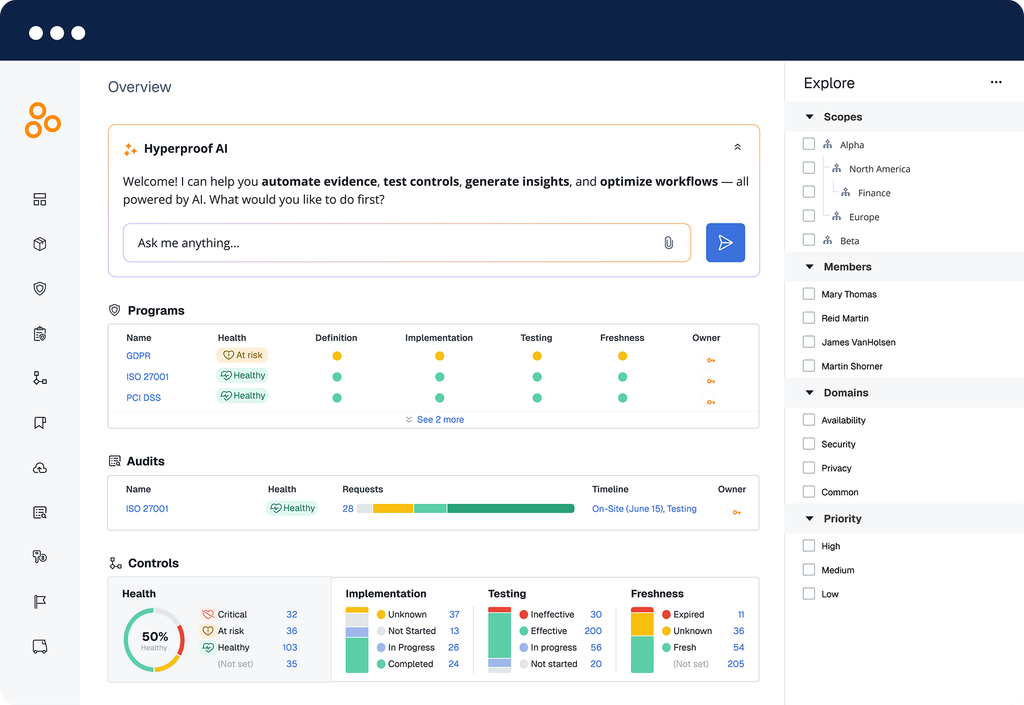
Hyperproof is an AI-powered GRC platform built for large, multi-framework organizations. Its cross-framework control mapping lets teams reuse existing controls across programs instead of rebuilding them for each new framework.
Key Features
- Cross-Framework Control Mapping: Reuse existing controls across multiple programs.
- Risk Management: Connect control health data to your risk registers.
- Policy Management and User Access Reviews: Run both inside the platform.
- Audit Management: Prepare for audits with structured evidence workflows.
Pricing
Custom quote.
Rating
G2 rating: 4.5/5 (222 reviews)
Pros
- Designed for organizations running many frameworks at once
- Cross-framework control mapping reduces duplicate control work
- Quantitative risk scoring helps you prioritize gaps
Cons
- Some G2 reviewers describe a learning curve for new users
- Some G2 reviewers say setting up integrations can take extra effort, especially for niche systems.
Related: Check the best Hyperproof alternatives
7. Optro (formerly AuditBoard)
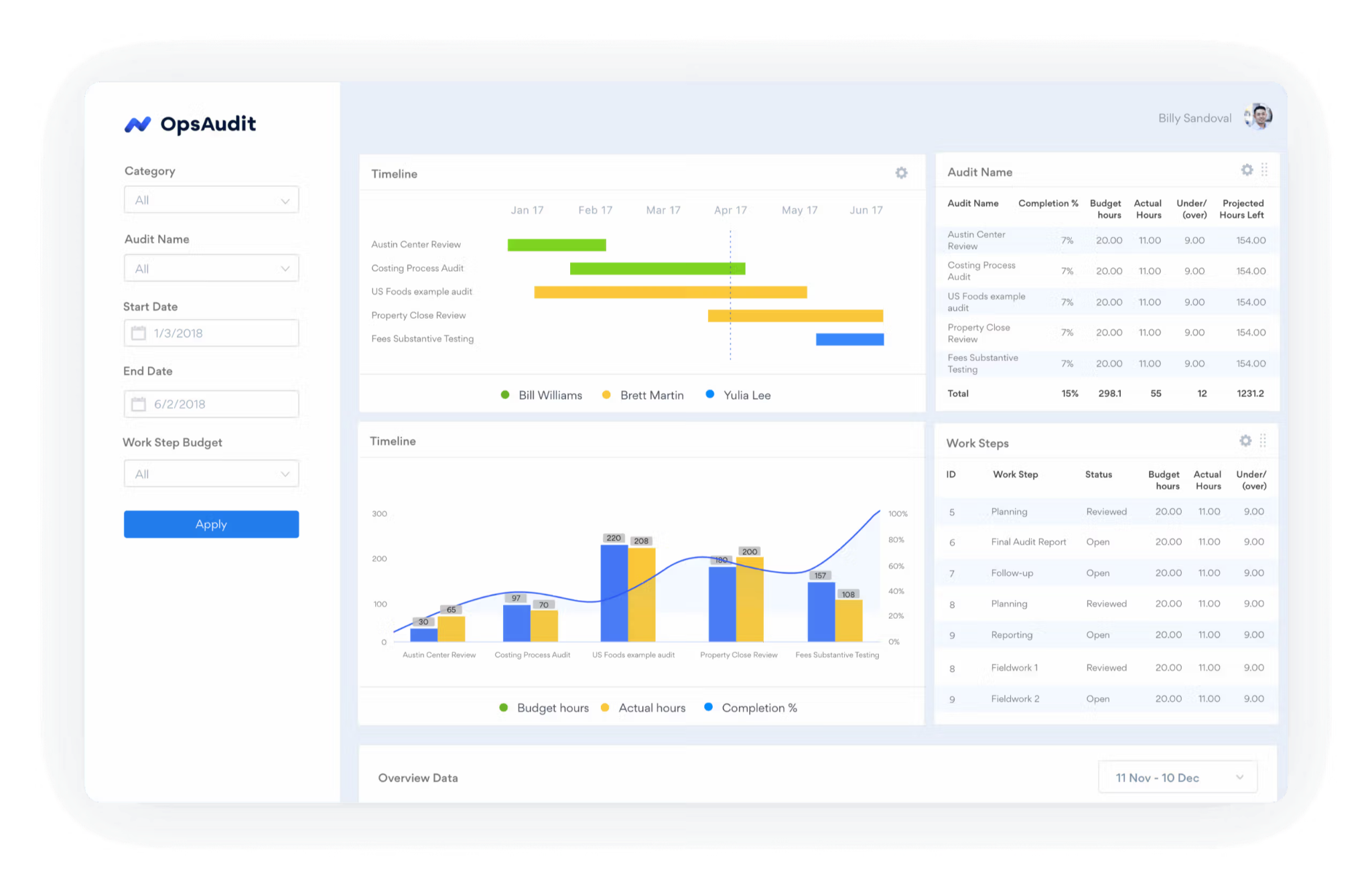
Optro, rebranded from AuditBoard in March 2026, is an AI-powered GRC platform that connects audit, risk, and compliance in one system. It started as a SOX compliance tool, and its users now include internal audit, enterprise risk, compliance, and IT risk teams.
Key Features
- Internal Audit Management: Plan, execute, and report on audits with structured workflows.
- SOX Compliance: Automate SOX control testing and deficiency tracking.
- Issue Tracking: Log issues, assign tasks, and track resolution.
- Risk Management: Assess and monitor risks with dashboards.
Pricing
Custom quote.
G2 Rating: 4.6/5 (1,625 reviews).
Pros
- Deep SOX and internal audit features rooted in its origins as a SOX compliance tool
- Cross-functional workflows connect audit, compliance, and risk teams
- It has a strong track record with large organizations
Cons
- Some G2 reviewers would like more flexible configuration and reporting options.
- Some G2 reviewers find moving between modules and dashboards clunky, with a learning curve for new users.
8. Scytale
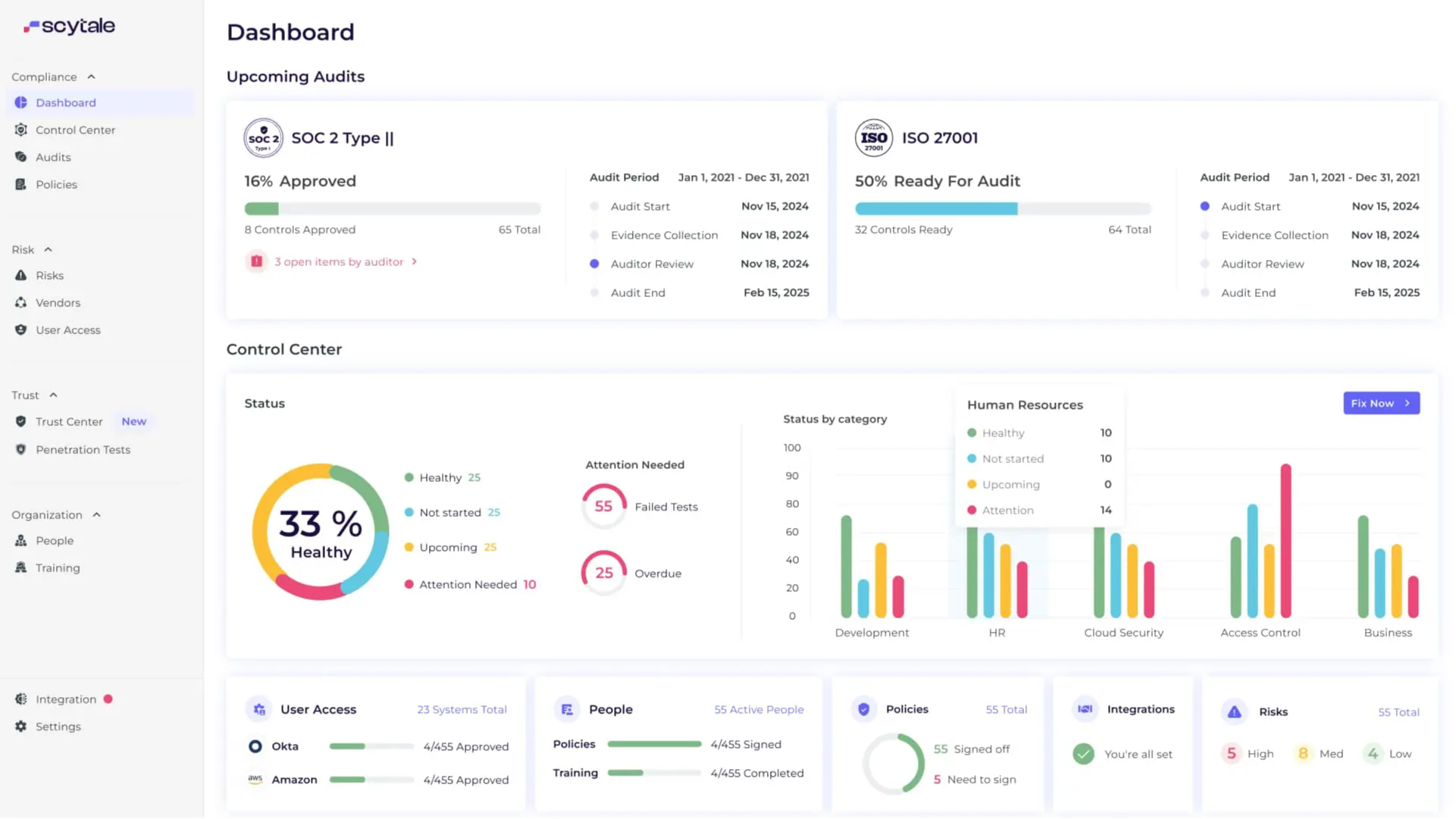
Scytale pairs AI compliance automation with hands-on expert guidance. Their team works alongside yours through the entire certification, from scoping through audit day. It supports SOC 2, ISO 27001, HIPAA, GDPR, and PCI DSS.
Key Features
- Expert services: GRC experts support you from onboarding through implementation and beyond.
- Automated Evidence Collection: Pull evidence automatically through 150+ integrations.
- AI GRC agents: Run continuously to keep controls monitored and audit-ready.
- Framework Coverage: 80+ frameworks with built-in control cross-mapping.
Pricing
Scytale doesn’t publish pricing, but itoffers bundled plans for startups, custom-built platform plans for security teams, and separate consulting packages.
Rating
G2 Rating: 4.7/5 (768 reviews).
Pros
- Compliance experts actively guide the process, so you aren’t on your own
- It’s a strong fit for startups without in-house compliance teams
- Intuitive user interface
Cons
- Some G2 reviewers say integrations can be limited for certain platforms or take effort to set up.
- Some G2 reviewers report that parts of the automated evidence collection can be buggy.
9. LogicGate Risk Cloud
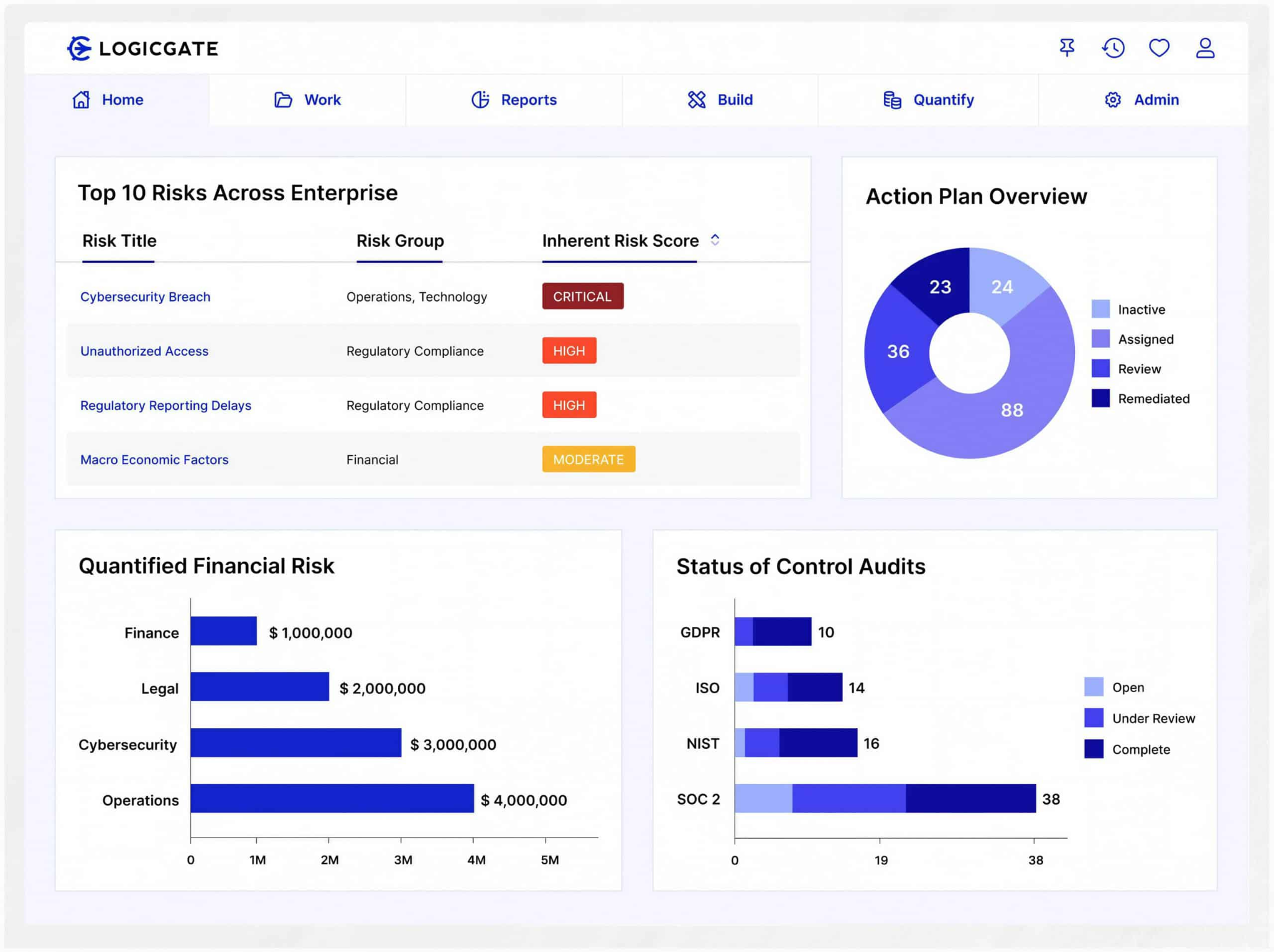
LogicGate Risk Cloud combines purpose-built applications and AI agents with a no-code graph database. That database connects controls, assets, and risks, so teams can configure workflows to fit their program without writing code.
Key Features
- Custom Workflow Builder: Design GRC applications with with no-code configuration
- Graph Database: Model relationships between risks, controls, and assets
- Third-Party Risk Management: Automate vendor assessments and scoring
- Risk Quantification: Score risks with quantitative models
Pricing
LogicGate doesn’t publish pricing. Pricing depends on the size of your business, the maturity of your program, and the problems you’re solving.
Rating
G2 Rating: 4.6/5 (191 reviews).
Pros
- The workflow builder lets you model GRC processes your way
- Graph database shows how risks, controls, and assets connect
- It’s flexible enough for custom use cases
Cons
- Some G2 reviewers say initial setup and workflow configuration take time, especially for teams new to GRC.
- Some G2 reviewers would like stronger built-in reporting
Related: Check our comparison with LogicGate.
10. OneTrust
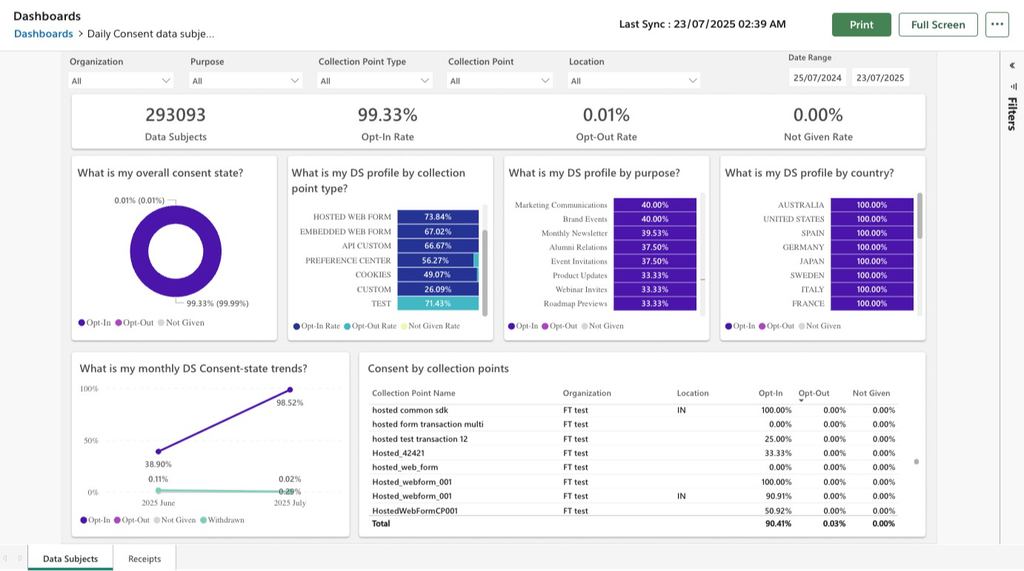
OneTrust is a broad enterprise governance platform covering AI governance, consent, data use governance, privacy, third-party management, and tech risk and compliance. Its Tech Risk & Compliance package helps teams turn requirements into tasks, consolidate IT assets, quantify risk, and automate assessments and control management.
Key Features
- Privacy management: Manage consent, data subject requests, and cookie compliance globally
- Risk Quantification: Standardize and quantify risk to prioritize mitigation
- Compliance Automation: Break requirements into actionable tasks, with templates and guidance
- Third-Party Management: Automate vendor intake, risk assessment, mitigation, and reporting
Pricing
OneTrust doesn’t publish pricing. It sells separate packages by area, and its Tech Risk & Compliance package is priced on admin users and asset inventory.
Rating
G2 rating: 4.3/5 (400+ reviews)
Pros
- It covers privacy, AI governance, third-party risk, and GRC in one platform
- Regulatory change tracking keeps programs current across jurisdictions
- It’s a strong fit for global enterprise organizations
Cons
- Some G2 reviewers find initial setup and configuration complex and time-consuming.
- Some G2 reviewers describe a steep learning curve for new users.
How We Evaluated these Tools
To compare these tools, we looked at the factors that matter most to multi-framework compliance teams:
- Pricing model: What each vendor publishes about its pricing and how its plans are structured.
- Framework coverage: Which frameworks each platform supports, and how it maps controls and evidence across them.
- Integrations: The tools each platform connects to for evidence collection and monitoring
- Setup and support: What vendors publish about onboarding, and what G2 reviewers say about getting started.
- User satisfaction: G2 ratings and the themes that come up most often in reviews.
How to Choose a Scrut Alternative?
Start with what your program needs today, and where it’s heading. Then ask every vendor on your shortlist the same questions.
- Test cross-framework mapping with your own frameworks: Most platforms on this list offer some form of control mapping. Ask each vendor to show how one control and one piece of evidence carry across your specific frameworks, such as SOC 2, HIPAA, and HITRUST. ZenGRC is built around this use case.
- Match the support model to your team: Some teams want hands-on expert guidance, which Scytale builds into its offering. Others want configurable workflows they can run themselves. Know which you need before the demo.
- Ask how pricing changes as you grow: Find out what happens to your bill when you add a framework, a user, or a module. ZenGRC offers an all-inclusive price with no hidden costs.
- Get a realistic onboarding timeline: Ask how long a team like yours typically takes to go live, and who supports you along the way. ZenGRC onboarding typically takes 4–8 weeks, with a designated onboarding specialist to guide the process.
Choosing a Platform That Grows With Your Compliance Program
Each platform on this list has its strengths. The right choice depends on what your program looks like today, and what it will look like when the next framework arrives.
If you’re running SOC 2 alongside HIPAA, HITRUST, PCI DSS, or CMMC, ZenGRC is built for that job:
- Test a control once and apply it across your mapped frameworks.
- Reuse evidence instead of collecting it again for each audit.
- Run HITRUST with a native, two-way connection to MyCSF.
- Get it all under one all-inclusive price, with typical onboarding in 4–8 weeks
Start with a demo and see how ZenGRC maps controls across your own framework stack.
Frequently asked questions
Does Scrut Automation support HITRUST certification natively?
As of September 2026, HITRUST isn’t listed on Scrut’s public framework pages, so confirm HITRUST support if it’s on your roadmap. Among the platforms on this list, Strike Graph and Drata both list HITRUST CSF as a supported framework. ZenGRC supports HITRUST with a native, two-way integration with HITRUST’s MyCSF, so evidence and control responses sync between both platforms automatically.
What’s the cheapest Scrut Automation alternative?
Of the platforms that publish pricing, Secureframe has the lowest starting price: its Fundamentals package starts at $7,000 per year. Strike Graph’s Certify plan starts at $21,500 per year. The other platforms on this list price by quote, so compare full quotes for your frameworks and team size.
Can I migrate my existing evidence from Scrut to another GRC platform?
Ask each vendor how it handles importing existing controls, policies, and evidence, and what support comes with it. At ZenGRC, a designated Customer Success Manager leads your onboarding, and typical onboarding takes 4–8 weeks.
Which Scrut alternative handles three-plus frameworks without per-framework pricing?
ZenGRC uses a flat-rate model with unlimited users, frameworks, vendors, and all modules included.